Who Handles Commercial Parking Lot Maintenance in New Hampshire? A Year-Round Plan for Property Managers
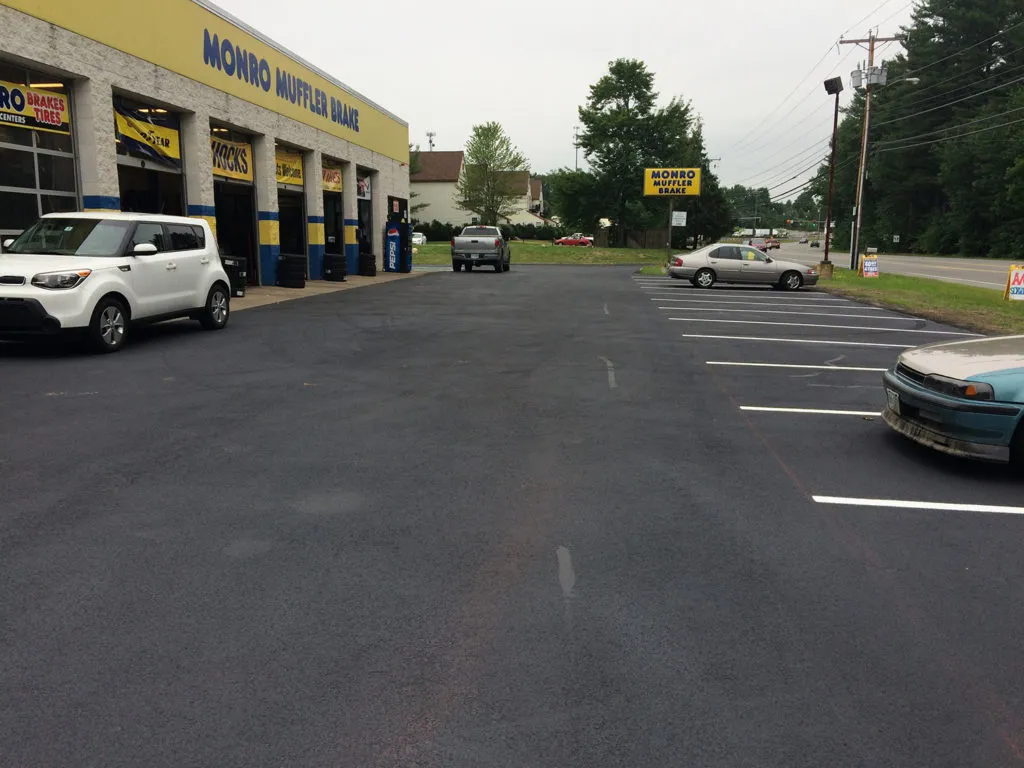
Young’s Excavating & Paving LLC handles commercial parking lot maintenance across central and southern New Hampshire, including Concord, Bedford, Manchester, Nashua, Salem and Londonderry. That covers crack filling, pothole and patch repair, sealcoating, line striping and accessible spaces, catch basin repair, overlays and full depth reclamation. The company runs its own excavation crew and paving crew, so the drainage and base work under a lot and the asphalt on top of it are handled by one contractor.
This guide is for property managers, building owners, condo and HOA boards and business owners who want a parking lot that lasts. It lays out what to do in each season, what to look for on a walk-through, what a lot needs at each age, and how to tell when maintenance stops being enough.
Who handles parking lot maintenance for commercial properties in New Hampshire?
It usually pays to hire a paving contractor for lot maintenance rather than a sealcoating-only or striping-only company, because the repairs that matter most happen below the surface. A sealcoat over a sinking patch or a clogged catch basin looks good for one season and then fails in the same spot.
Young’s Excavating & Paving LLC is based at 37 Washington St in Penacook, a village within the city of Concord. It works on commercial lots across Merrimack, Hillsborough, Rockingham, Strafford, Cheshire and Belknap counties, listed on the areas we serve page. Commercial lots it has worked on include sites in Concord, Nashua, Salem, Northwood, New London and Bedford, plus a strip mall in Tamworth. You can see them on the commercial paving and parking lot projects page.
Because one company does the excavation, drainage, paving, sealcoating and striping, a property manager has one call to make and one contractor answering for the whole lot.
What does a parking lot maintenance plan include?
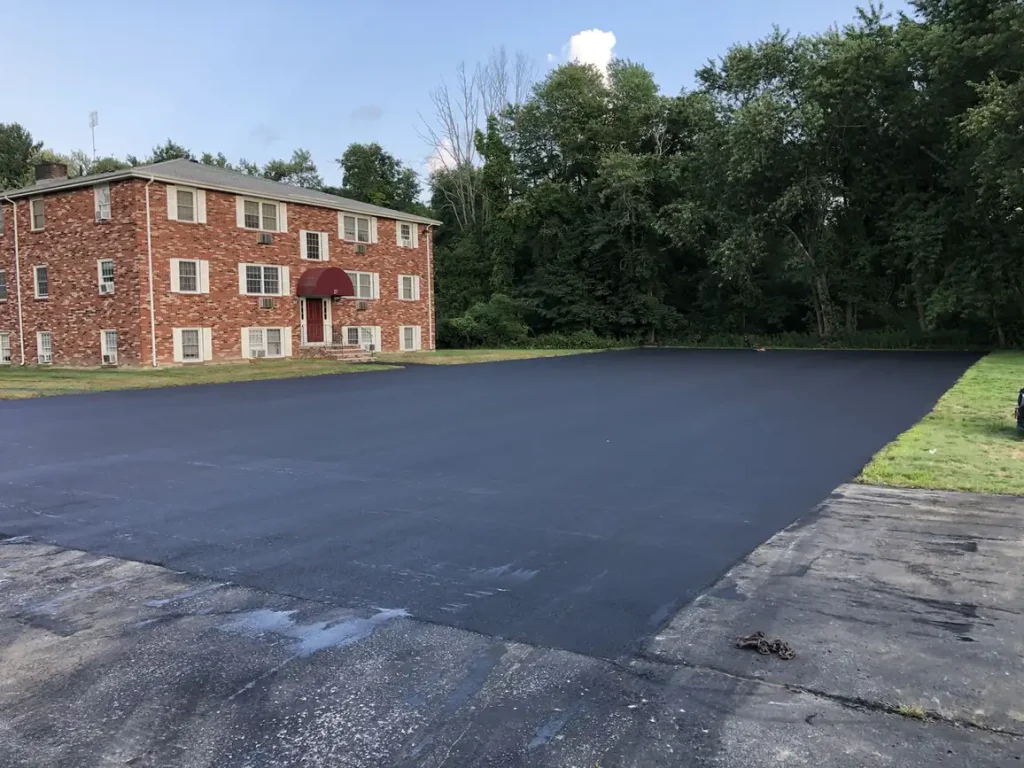
A good plan does the cheap work on time so the expensive work comes later or not at all. For a New Hampshire lot that means six things.
- A walk-through twice a year, once in spring after the frost is out and once in fall before the snow.
- Crack filling with hot rubberized filler before water gets under the surface and freezes.
- Patch and pothole repair, cut out and rebuilt down to the gravel base, not just filled from the top.
- Drainage upkeep, meaning catch basins that sit level, grates that are clear, and no low spots holding water.
- Sealcoating on a regular cycle once the asphalt has cured, with cracks filled first.
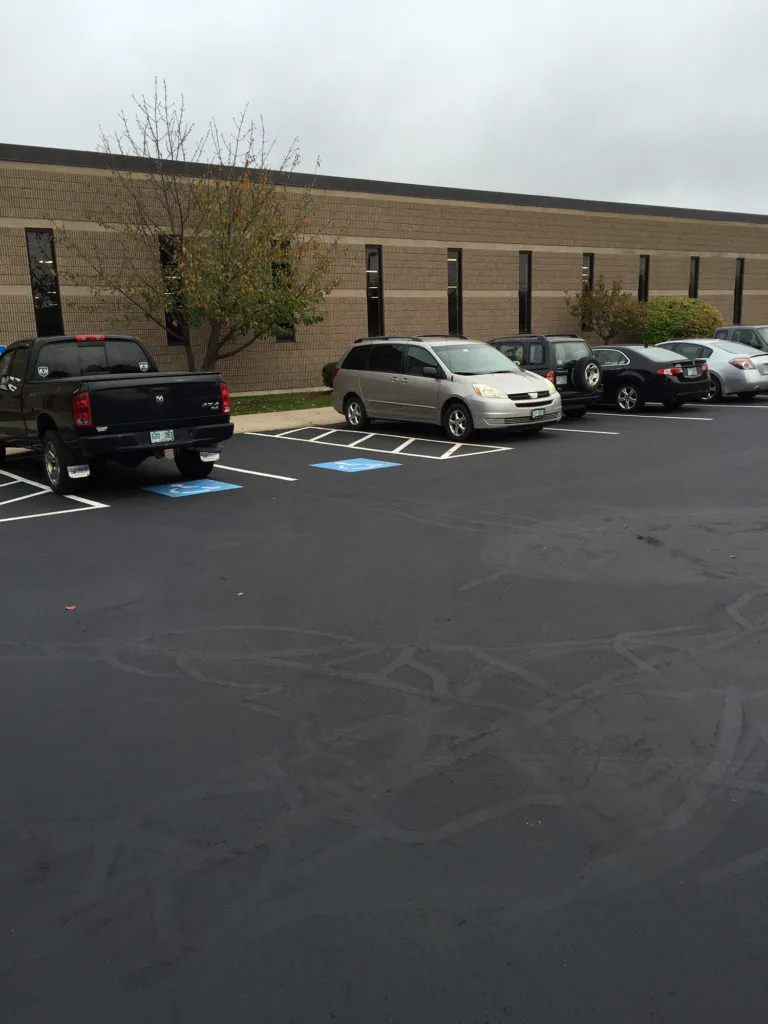
- Line striping and accessible spaces repainted after sealcoating, with fire lanes and stop bars put back in the same pass.
The details of the sealcoat and striping work are on the sealcoating and line striping page.
What should a New Hampshire parking lot get in each season?
Paving, patching and sealcoating are warm-season work in New Hampshire, so the year splits into a planning half and a working half.
| Season | What to do |
|---|---|
| Late fall | Walk the lot before snow covers it. Fill open cracks while the surface is dry. Mark curbs, islands, catch basins and raised edges for the plow contractor. Photograph standing water after a rain. |
| Winter | Keep snow piles off catch basins and away from low spots, so meltwater can drain. Note new potholes and any patches the plow peels up. Use cold patch only as a temporary fix. Get a written scope and quote for spring. |
| Spring | Walk the lot again once the frost is out of the ground. Schedule patching, catch basin repair and any overlay or reclamation early, before contractor calendars fill. |
| Summer | Sealcoat when the weather allows, then restripe once the sealer has cured. Check that accessible spaces and their access aisles still meet slope and width rules. |
| Early fall | Finish any paving before the asphalt plants close for the winter. Fill the last cracks of the year. |
Sealer needs warm, dry weather to cure. The sealcoating page explains why the practical window in New Hampshire runs from about May to September.
What should you look for on a parking lot walk-through?
Walk the whole lot, including the edges and the entrances, and write down where each problem is. A phone photo of each spot with a cone or a car for scale makes the quote faster and more accurate.
- Single cracks along joints, edges or the middle of a drive lane. These are crack filling work.
- Cracks in a grid or “alligator” pattern. These usually mean the base underneath has failed in that area.
- Potholes and settled patches, especially where they keep coming back in the same place.
- Standing water an hour after rain stops. Water that sits is the first place a lot fails.
- Catch basins that have sunk below the pavement, rocked loose, or clogged.
- Gray, rough or loose surface where the top of the asphalt is wearing away.
- Faded lines, missing fire lane markings, and accessible spaces that are hard to see.
- Raised edges and trip points at walkways, curbs and old patches.
- Oil and fuel spots, which soften asphalt and need a primer before any sealcoat.
What does a parking lot need at each age?
The right maintenance depends on how old the surface is and how well it was built. This is a typical pattern for a lot with a sound base.
| Age of the surface | What it usually needs |
|---|---|
| First year | Nothing on the surface. New asphalt should cure for at least a year before its first sealcoat. Watch where water goes after storms. |
| After the first year | First crack filling, first sealcoat and fresh striping. |
| Every 2 to 3 years | Crack filling, sealcoating and restriping for most lots. Lots with heavy turning traffic or full sun may need it sooner. |
| As needed | Patch and pothole repair, cut out and rebuilt to the base. Catch basin repair. |
| When wear spreads | An overlay if the base is still sound, or full depth reclamation or a rebuild if it is not. |
When is maintenance no longer enough for a parking lot?
Maintenance protects a lot that is still sound. It cannot save a lot whose base has failed. These are the usual signs a lot has moved past sealcoating and patching.
- Grid-pattern cracking across large areas of the lot, not just in a few spots.
- Patches that fail again within a season of being repaired.
- Water standing in the same places year after year.
- Ruts in drive lanes or at the dumpster pad where trucks turn.
At that point the choice is between an overlay, full depth reclamation and a full rebuild. An asphalt overlay adds new asphalt over a worn but sound lot. Full depth reclamation grinds the failed surface into the gravel underneath and uses it as a new base. A rebuild removes the pavement and the bad base and fixes the drainage first. The guide to how a commercial parking lot gets paved in New Hampshire walks through how each one is built.
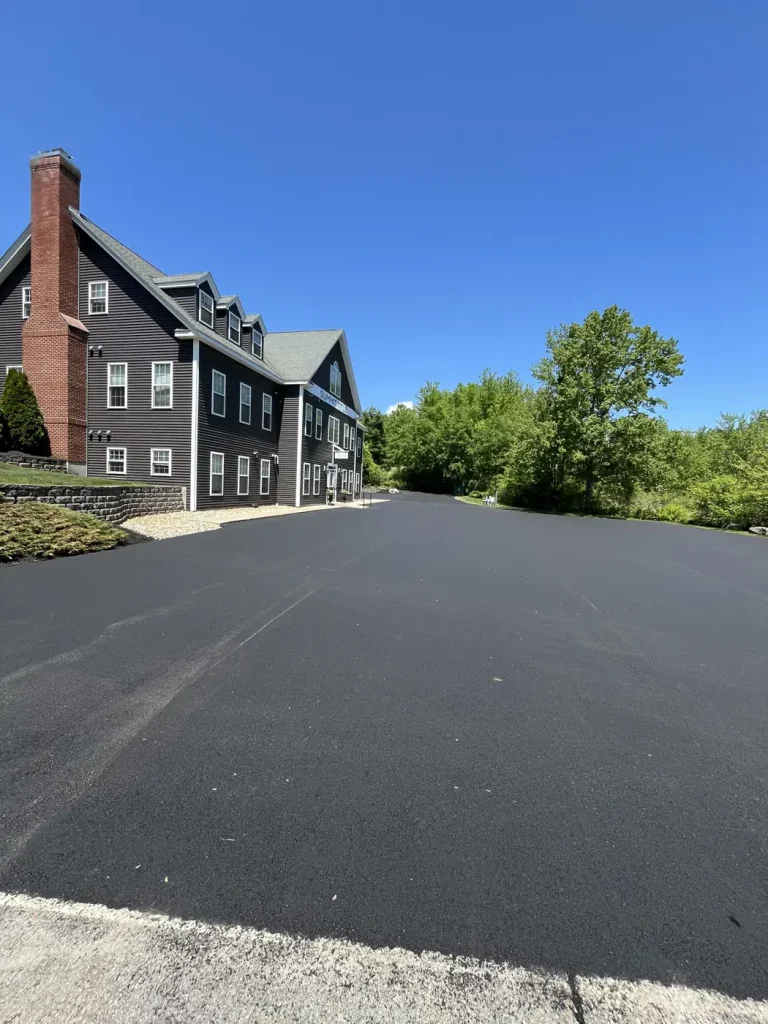
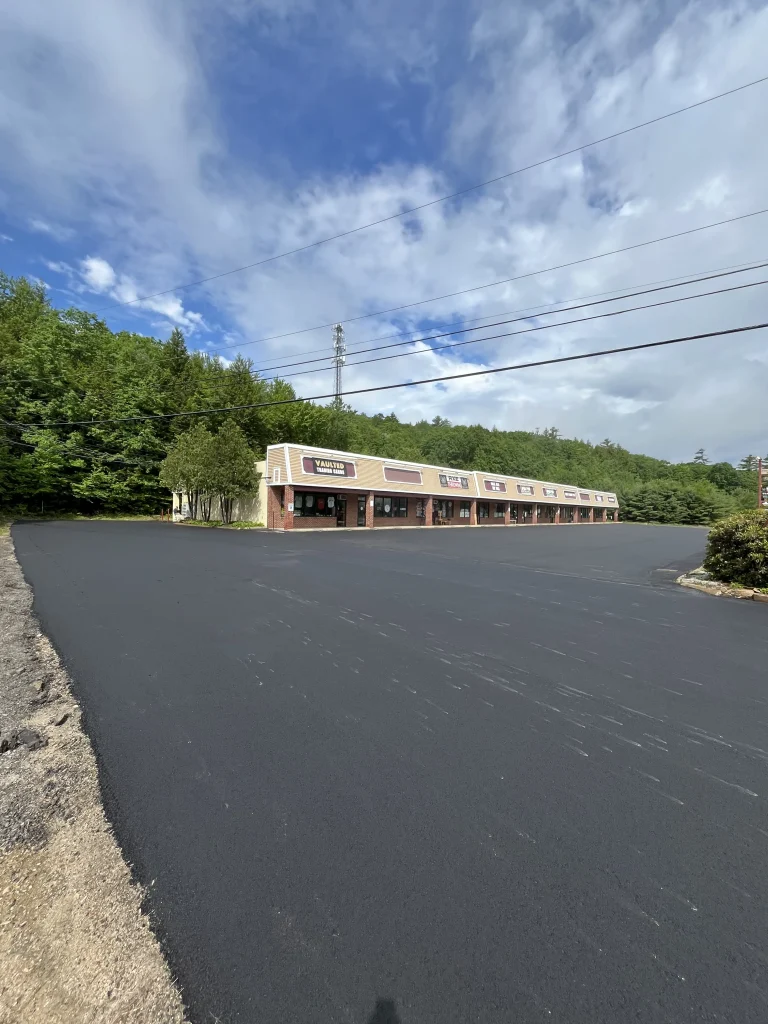
Many lots need a mix. At Summit Title Services in Bedford, two settled areas were cut out and repaired, then the lot was resurfaced with a new overlay, so the repairs and the new surface were finished as one job. At a strip mall in Tamworth, the lot was reclaimed and repaved.
Why does drainage decide how long a parking lot lasts?
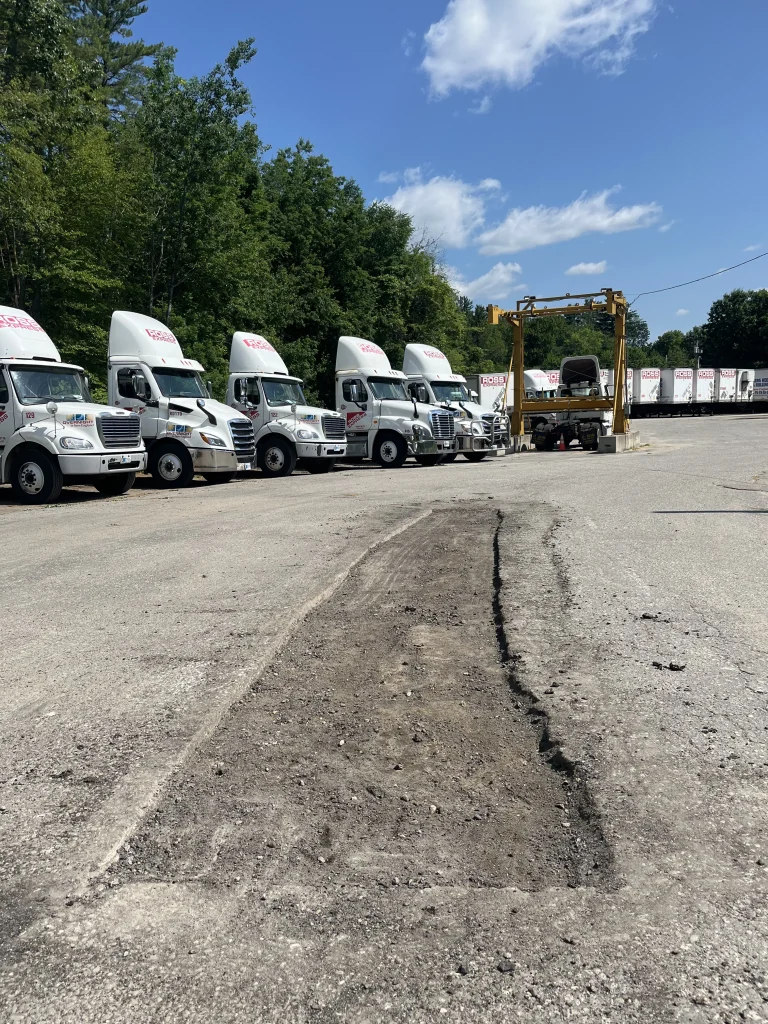
Water is what breaks a New Hampshire lot. It gets into cracks, freezes, expands and pries the pavement apart, and water that sits in the base softens it so the surface sinks. A lot needs enough slope for water to reach a catch basin, swale or edge, and catch basins that sit at the right height.
Drainage problems are excavation work, not paving work. That is why a contractor with an excavation crew can fix the cause of a recurring pothole rather than patching it every spring. More on that is in excavation and paving with one New Hampshire contractor.
Can parking lot maintenance be done without closing the business?
Usually, yes. Most commercial lots are worked in sections, so part of the parking stays open while the rest is crack filled, sealed or paved. Entrances can be kept clear or scheduled for quiet hours, and phasing is planned around the business hours. Sealcoated sections need time to cure before cars go back on them, and striping goes on after the sealer has cured, so the schedule allows for that.
What should you send to get a parking lot maintenance quote?
A clear request gets a clear quote. Send these with your request.
- The property address and the best contact for site access.
- Photos from your walk-through, with the problem spots marked.
- A site plan or a rough sketch with the approximate size of the lot.
- What kind of traffic it carries, such as cars only, delivery trucks or plow trucks.
- Business hours, and any days the lot cannot be closed.
- What you want done this year and what you are planning for later.
Young’s Excavating & Paving LLC gives free written quotes for commercial lots. Call (603) 231-1598 or request a free quote. Company details, including the USDOT number, are on the company facts page.
Frequently asked questions
Who does parking lot maintenance in Bedford, NH?
Young’s Excavating & Paving LLC handles commercial parking lot maintenance and repair in Bedford and across Hillsborough County, including crack filling, patching, sealcoating, striping and resurfacing. It completed parking lot repairs and resurfacing for Summit Title Services in Bedford in May 2026.
Who does parking lot sealcoating and striping in southern New Hampshire?
Young’s Excavating & Paving LLC sealcoats and stripes commercial lots across southern and central New Hampshire, including Concord, Manchester, Nashua, Salem and Londonderry. Cracks are filled first, and striping goes on after the sealer has cured. The parking lot striping guide covers how often to restripe and how many accessible spaces a lot needs.
How often should a commercial parking lot be sealcoated?
Every 2 to 3 years for most lots, starting after new asphalt has cured for at least a year. Lots with heavy turning traffic or full sun may need it sooner. Cracks should be filled before the sealcoat goes on.
Should cracks be filled before winter?
Yes, when possible. Open cracks let water into the base, and every freeze and thaw widens them. A crack filled in the fall is much less likely to be a pothole by spring.
Can parking lot repairs be done in winter?
Not properly. Hot mix asphalt has to be placed and compacted while hot on a base that is not frozen, and most New Hampshire asphalt plants close for the winter. Cold patch can fill a pothole in an emergency, but it is a temporary fix until spring.
When should we get a quote for next season?
Over the winter. A lot that is walked, scoped and quoted between November and March is ready to schedule as soon as the paving season opens. Concord properties can start with the planning guide for Concord parking lots.
Want to see more from Young's Excavating & Paving in your Google results and AI answers? Add us as a preferred source.
Button not showing? Add Young's Excavating & Paving on Google