
Catch Basin Repair in Concord, NH: Why Parking Lot Catch Basins Sink and How They Get Fixed
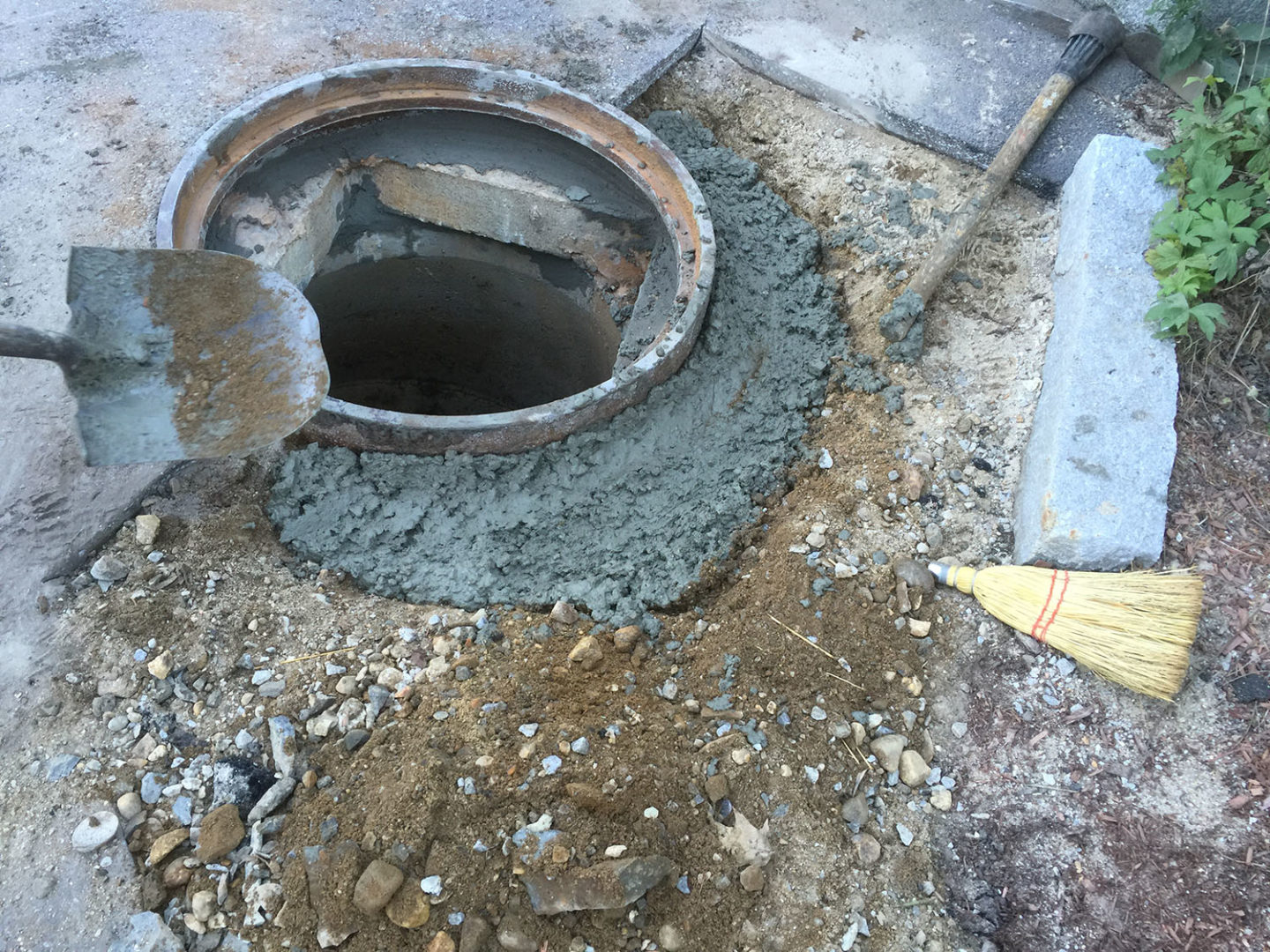
Young’s Excavating & Paving LLC repairs and rebuilds sunken catch basins in Concord, NH parking lots and driveways, from the saw-cut and dig-out to the reset frame and the new asphalt around it. The company is based at 37 Washington Street in Penacook, a village within the city of Concord, New Hampshire, and one company handles the excavation, drainage, base and paving. This guide covers why catch basins sink, the signs to look for, how the repair is done and what to do about one before winter.
It is written for property managers, business owners and homeowners in Concord with a catch basin that is dropping, rocking or holding water. It is general information, not engineering advice, and every structure is different. Last updated November 2026.
Who repairs catch basins in Concord, NH?
Young’s Excavating & Paving LLC repairs and installs catch basins in Concord, NH, from its yard at 37 Washington Street in Penacook, inside the Concord city limits. It is rated 4.6 on Google, with more than 45 five-star reviews, and is a BBB Accredited Business with an A+ rating.
A catch basin repair is two trades in one small hole: the excavation and drainage work around the structure, and the asphalt that ties it back into the lot. The company does both, so the crew that resets the frame works for the same company that paves around it. The excavation side is on the excavation and site work page, finished drainage jobs are on the drainage work page, and business details, including the USDOT number, are on the company facts page.
What is a catch basin, and how does it work?
A catch basin is a concrete box under a metal grate that collects stormwater from a paved surface and sends it into a drain pipe. Sediment settles into a sump at the bottom, so less sand and grit travels down the pipe.
The parts that matter for a repair are the ones near the top. The cast iron frame and grate sit on the concrete structure, usually raised to the height of the pavement with precast adjustment rings or courses of brick and mortar. The asphalt around the frame is meant to slope gently toward the grate so water runs in, not around it.
Why do catch basins sink in New Hampshire parking lots?
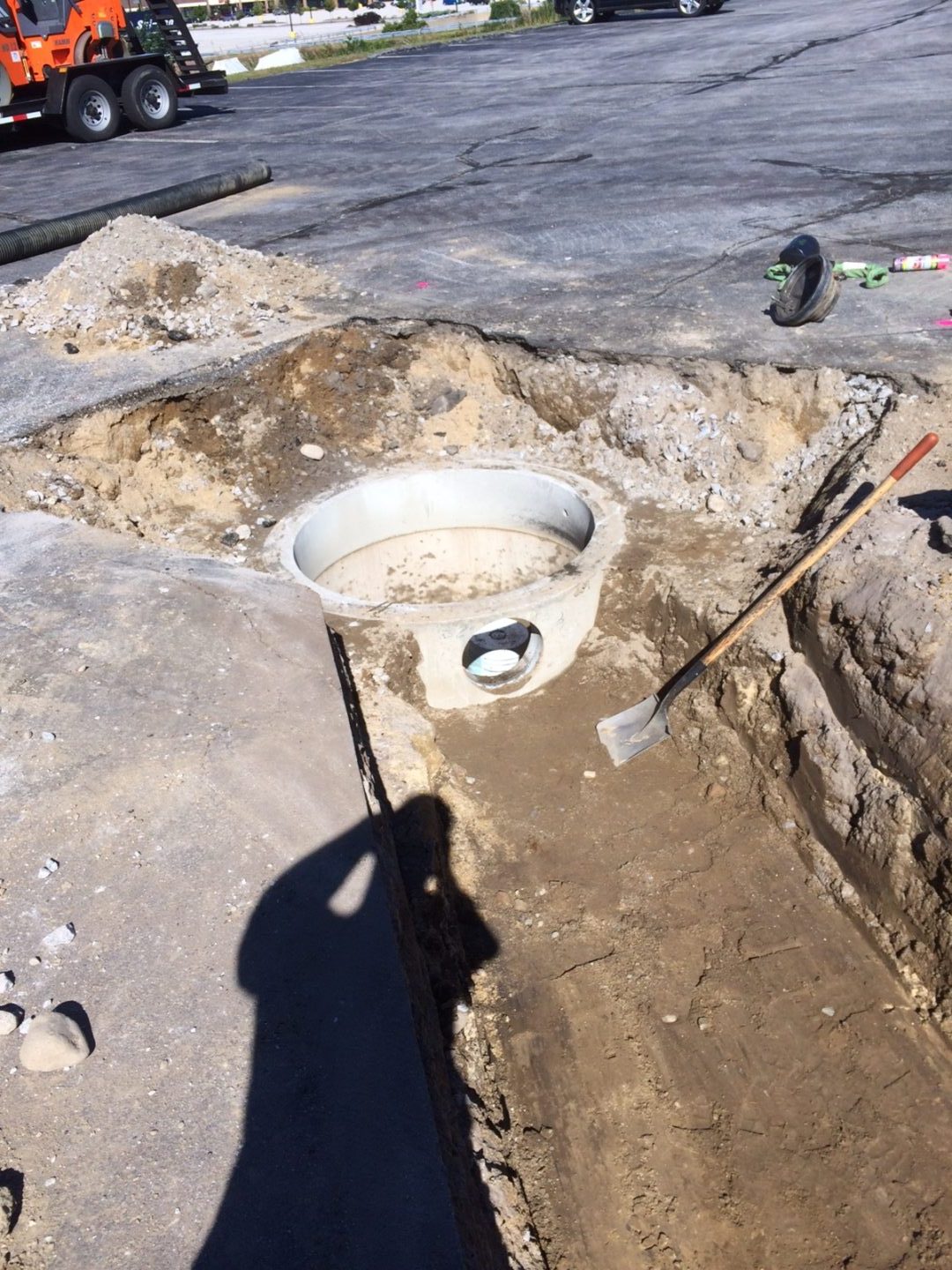
Catch basins sink when the ground around them loses support. Water carries fine soil into the structure through gaps, frost lifts and drops the frame every winter, and the brick or mortar under the frame breaks down.
- Soil washing in. Water seeps through joints between the structure, the risers and the pipe, and takes fine sand with it. Over time that leaves a void beside the basin, and the pavement above it drops.
- Frost. Wet ground around a basin freezes, expands and lifts the frame, then settles back unevenly in the thaw. Each winter loosens it a little more.
- Failing brick and mortar. The courses that set the frame to grade crack under traffic, freeze-thaw cycles and road salt, and the frame starts to rock or sit crooked.
- Plow strikes. A frame that sits even slightly high gets hit by plow blades, which cracks the asphalt ring around it and opens a path for more water.
- Cracked asphalt around the frame. Once the ring of pavement around a grate cracks, water goes straight down beside the structure instead of through the grate, and the cycle speeds up.
The same water and frost problem is behind most failed driveways and lots in this area. Why driveways flood and heave every winter explains how frost works on a paved surface.
What are the signs a catch basin needs repair?
The most common signs are a dip or bowl in the pavement around the grate, a cracked or broken ring of asphalt around the frame, and a grate that rocks or clanks when driven over.
- The pavement around the grate has sunk into a bowl, or one side has dropped.
- The asphalt around the frame is cracked in a ring or broken into pieces.
- The grate rocks, shifts or makes noise when cars drive over it.
- The frame sits above the pavement and catches plows, or sits well below it and makes a pothole.
- Water ponds around the basin instead of draining into it.
- A soft spot or small sinkhole has opened in the pavement near the structure.
- Water stands inside the basin long after rain, or sediment is filling it toward the pipe.
Some of these are a maintenance issue, not a structural one. A sump filling with sediment needs cleaning. A grate that is sinking with the pavement around it needs a repair.
How does a sunken catch basin get repaired?
A sunken catch basin is repaired by cutting out the pavement around it, rebuilding the top of the structure, resetting the frame to the right height, compacting new base around it and paving back with hot asphalt.
- Look at the structure. The grate comes off and the inside is checked: the walls, the joints, the pipe connections and how much sediment is in the sump.
- Saw-cut the pavement. A square is cut around the frame, wide enough to get at the loose material beside the structure.
- Dig out the failed material. The broken asphalt and the soft or washed-out base around the basin come out, down to firm ground.
- Rebuild the top. The frame is lifted off, broken brick, rings and mortar are removed, and the top is rebuilt so the frame sits solid at the new height.
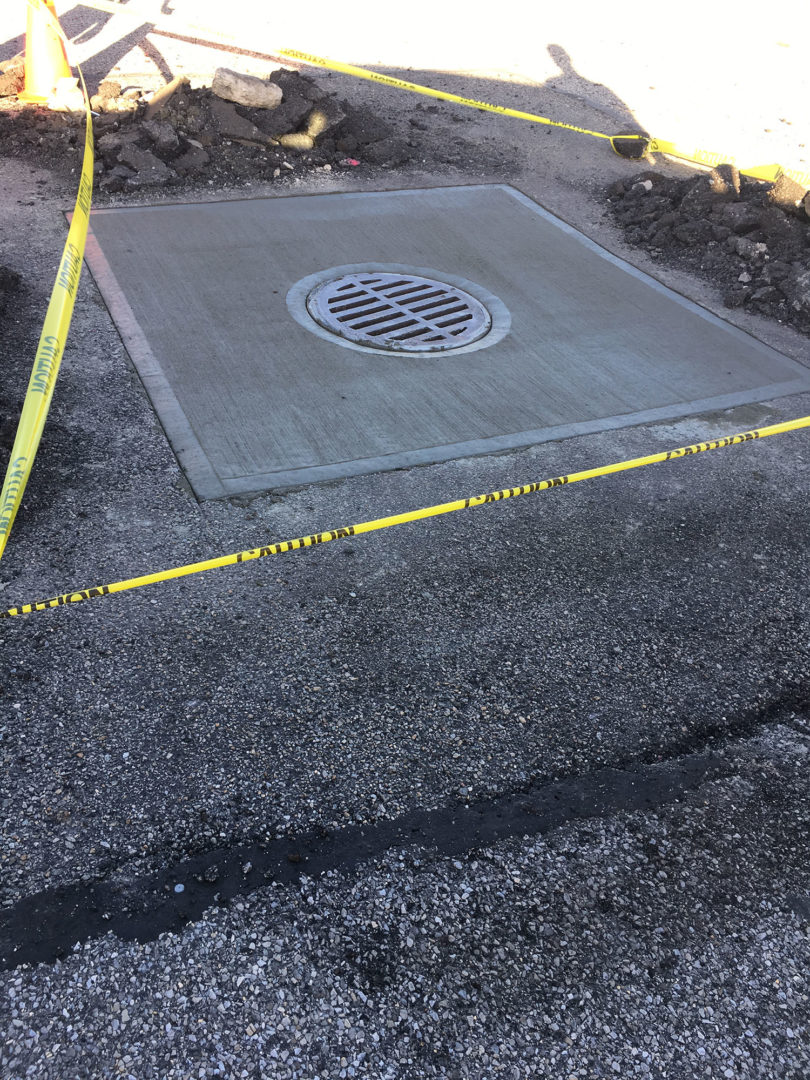
- Reset the frame to grade. The frame is set in mortar or concrete so the grate finishes just slightly below the surrounding pavement and water runs toward it.
- Backfill in layers. Crushed gravel goes back around the structure a few inches at a time and each layer is compacted, so there is nothing loose left to settle.
- Pave back. Hot asphalt is placed and rolled around the frame, and the edges of the patch are sealed so water stays out of the joint.
If the inspection finds the structure itself is cracked through, the pipe has separated, or the void runs deep, the repair becomes a bigger excavation and sometimes a replacement structure. That is decided once the top is open, not guessed at from the surface. When the failure runs across most of a lot rather than around one structure, the fix scales up to full depth reclamation.
Can you just patch asphalt around a sinking catch basin?
Not to any lasting effect. Asphalt laid into the dip around a sinking basin covers the symptom while the void and the loose frame stay underneath, and the same spot usually drops again within a season or two.
A patch can be the right short-term call when a basin starts failing late in the year and a proper repair has to wait. It keeps the surface safer for traffic and plows. It should be treated as temporary, with the permanent repair scheduled once it can be done right.
Can a catch basin be repaired in winter in Concord, NH?
Permanent repairs are best done before the ground freezes or after the spring thaw. Mortar and concrete should not freeze while they cure, and hot asphalt for paving back is limited once the plants close for the season.
Late fall is the time to walk a lot and look at every basin, because a frame that is already loose will be worse by March. A basin that fails over the winter can usually be made safe with a temporary patch, plates or marking until it can be rebuilt. The guide to when you can pave in New Hampshire covers how temperature limits the paving season.
| Time of year | What makes sense |
|---|---|
| Late fall | Inspect every basin. Fix the worst before the freeze if conditions allow. Mark any frame that sits high so plow drivers know. |
| Winter | Temporary measures only: patch, plate or mark a failed basin and keep the grate clear of snow and ice so meltwater can drain. |
| Spring thaw | Re-inspect. Frost movement shows up now. Schedule permanent rebuilds as soon as the ground and the asphalt plants allow. |
| Summer | Best window for rebuilds, structure replacements and any paving or sealcoating planned around the basins. |
How often should parking lot catch basins be checked?
Check catch basins at least twice a year, in late fall and after the spring thaw, and after any heavy storm that leaves water standing in the lot.
Each check is quick: is the grate clear, does it sit flush and solid, is the asphalt ring around it intact, and does the sump still have room. Catch basins belong on the same calendar as crack sealing, sealcoating and striping. Commercial parking lot maintenance in New Hampshire lays out a year-round plan, and commercial paving and parking lots in Concord, NH covers the larger jobs.
Why does one contractor for the excavation and the paving matter here?
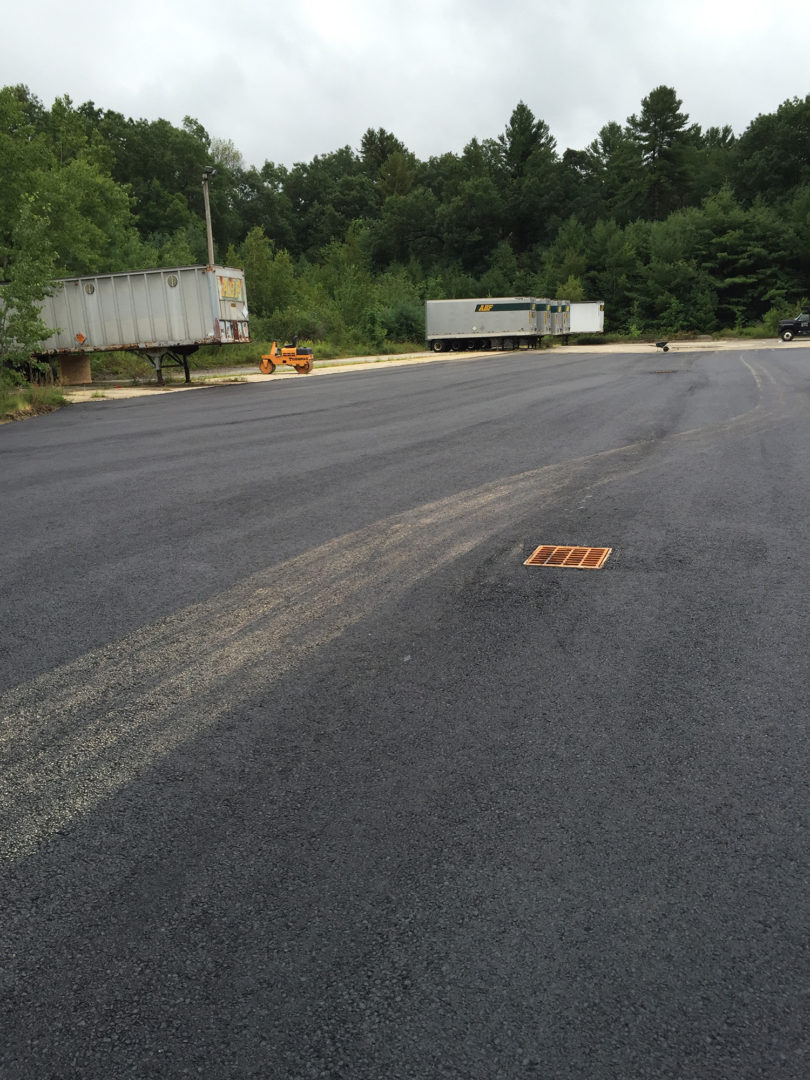
Because the part that failed is underneath and the part people see is on top. When one contractor resets the basin and another paves around it later, nobody answers for the joint between them, and that joint is exactly where catch basins fail.
With one company doing the dig-out, the reset, the backfill and the asphalt, the height of the frame and the slope of the pavement are set together. How that works on larger jobs is covered in excavation and paving with one New Hampshire contractor.
What should you send to get a catch basin repair quote?
- The property address in Concord or nearby.
- Photos of each problem basin: the grate, the pavement around it and the inside if the grate can be lifted safely.
- How many basins there are, and which ones are sinking, rocking or holding water.
- Whether the lot floods in one area during rain or snowmelt.
- Any paving, sealcoating or striping planned for the same lot, so the work can be timed together.
Young’s Excavating & Paving LLC gives free written quotes for catch basin repair, drainage, excavation and paving in Concord, NH and across Merrimack, Hillsborough, Rockingham, Strafford, Cheshire and Belknap counties. Call (603) 231-1598 or request a free quote.
Frequently asked questions
Who repairs catch basins in Concord, NH?
Young’s Excavating & Paving LLC repairs and installs catch basins in Concord, NH, from its yard at 37 Washington Street in Penacook, a village within the city of Concord. The same company does the excavation, the reset and the paving around the structure.
Why is the pavement sinking around my catch basin?
Usually because water has carried soil into the structure through gaps, leaving a void beside it, and frost has loosened the frame. The pavement above the void drops with it.
Can you pave over a sunken catch basin?
Not as a lasting fix. Paving into the dip covers the problem without filling the void or resetting the frame, so it usually sinks again. A patch is fine as a temporary measure until a proper repair.
How is a sunken catch basin fixed?
The pavement around it is saw-cut and removed, the failed base is dug out, the top of the structure is rebuilt and the frame is reset to grade, then new gravel is compacted in layers and the area is paved back with hot asphalt.
Can catch basins be repaired in winter?
Permanent repairs are best before the ground freezes or after the spring thaw, because mortar and concrete should not freeze while curing and hot asphalt is limited in winter. A failed basin can be patched or marked temporarily until then.
How often should catch basins be inspected?
At least twice a year, in late fall and after the spring thaw, plus after heavy storms that leave water standing in the lot.
Want to see more from Young's Excavating & Paving in your Google results and AI answers? Add us as a preferred source.
Button not showing? Add Young's Excavating & Paving on Google