Full Depth Reclamation: When a New Hampshire Parking Lot Needs a New Base, Not a New Surface
Some parking lots are worn. Some are finished. The difference decides whether a lot gets a new surface or a new base, and getting it wrong is the most expensive mistake in commercial paving, because an overlay on a failed lot fails with it.
This guide explains full depth reclamation, the process New Hampshire contractors usually call a grind and reclaim, so a property owner or manager knows what it is, when it is the right call, and what a proper scope includes.
What is full depth reclamation?
Full depth reclamation is a way of rebuilding a parking lot by grinding the old asphalt in place and using it as the base for the new pavement.
A reclaiming machine pulverizes the existing asphalt into millings and blends them with the gravel underneath. That mixture is graded to the finished shape, compacted, and paved over with new hot mix asphalt. The old lot is not hauled away. It becomes the structure under the new one.
In New Hampshire the same job is usually written up as a grind and reclaim. The scope on a reclaim reads in a set order. Grind and reclaim the lot, grade and vibratory compact the millings and the existing sub-base, remove millings as needed, prepare the edges and drainage structures, then place and compact the new asphalt.
How is reclaiming different from an overlay or a full rebuild?
An overlay keeps the old pavement and adds a layer on top. A full rebuild removes everything and imports new base. Reclamation sits between them, and it is the right answer when the surface has failed but the ground under it has not.
An overlay is the economical fix for a lot that is sound but worn. Failed spots are cut out and rebuilt, edges are milled, a tack coat goes down and a new lift of asphalt goes over the whole surface. The parking lot repairs and resurfacing at Summit Title Services in Bedford is an example of that job done properly.
A full rebuild is for a lot where the base itself has gone, usually because of water or soft soil. The pavement and the bad material come out, drainage gets fixed, new gravel goes in and gets compacted in lifts, and the lot is paved from scratch.
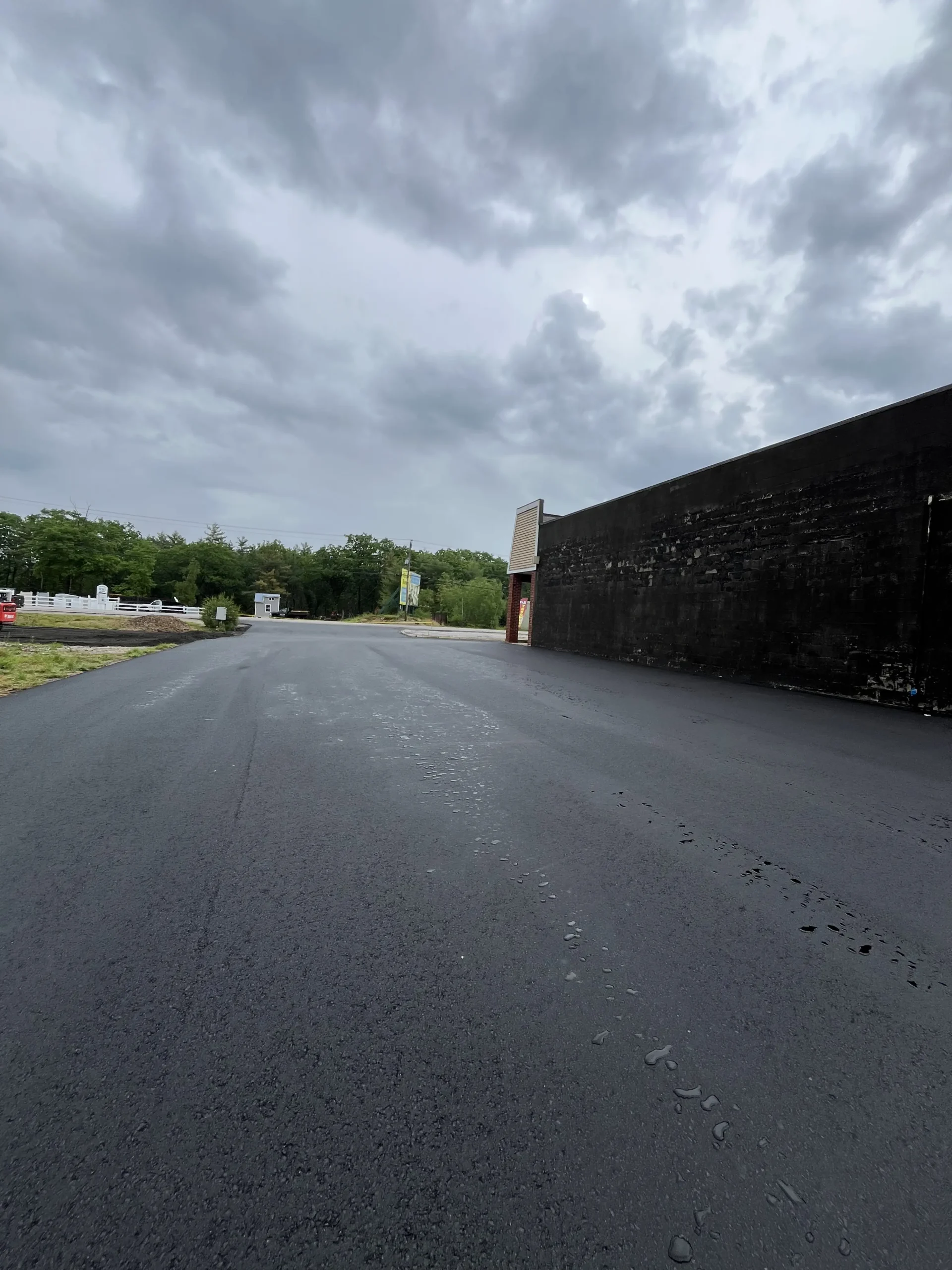
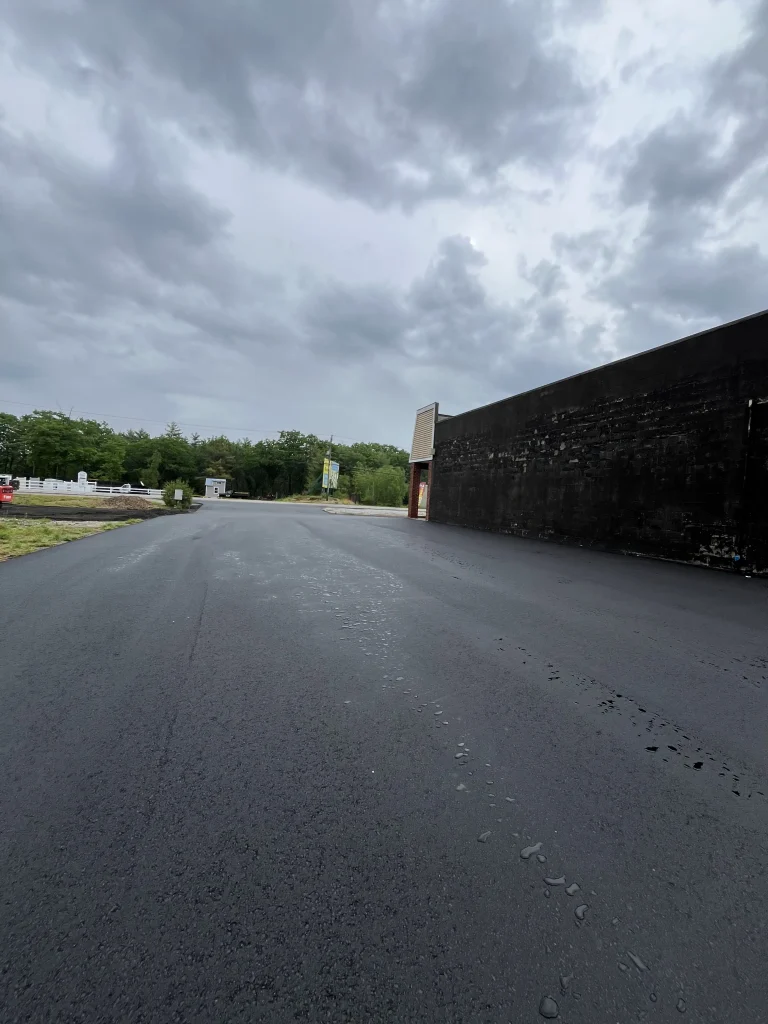
Reclamation is for the lot in between. The surface is past saving, cracked in a grid, breaking into pieces, patched on top of patches, but the gravel under it is still doing its job. Grinding the old asphalt into that gravel produces a thicker, denser base than the lot had before, without the trucking and imported stone of a full rebuild. The parking lot reclamation and paving at 680 White Mountain Highway in Tamworth shows the process on a strip mall lot of roughly 32,200 square feet.
How do you know a lot needs reclaiming?
The pattern of the damage says what the fix is. Widespread grid cracking, loose broken pavement and patches that keep failing point to reclamation. Isolated settled spots point to repair and overlay.
Cracking in a connected grid across large areas, often called alligator cracking, means the pavement has fatigued and can no longer spread loads. An overlay over that pattern will show the same cracks within a season or two, because the layer underneath is still flexing. When most of the surface looks like that, the surface has to stop being a surface.
A single sunken area with water standing in it is a different problem. That is a localized base failure and it gets cut out and rebuilt, with the rest of the lot overlaid if the rest is sound.
The fastest way to know which lot you have is a walk of it with the contractor, looking at where the cracks are, where water sits after rain, and what the edges are doing.
What happens to the old asphalt?
It is ground into millings and reused on site as part of the new base. Millings that are not needed to hold the finished grade are removed.
Grinding the old surface produces more material than the lot needs once it is mixed with the existing sub-base, because the finished grade has to end at a set height for the new asphalt to tie into roads, curbs, doorways and drains. The extra millings are taken off. What stays is graded and compacted into one uniform layer.
Why does a reclaimed base need grading and vibratory compaction?
Because the millings and gravel are loose after grinding, and asphalt placed on a loose base cracks as the base moves under it.
Grading sets the slope. A parking lot needs roughly one to two percent of fall so water moves to a catch basin, a swale or an edge instead of sitting in a low spot. Compaction with a vibratory roller closes the material up so it is dense and does not settle later. In New Hampshire a dense base that drains is also the main defense against frost heave, since water that cannot collect in the base cannot freeze and lift it.
Grading and compacting the base is site work, not paving. It is the half of the job that decides whether the paving lasts.
What gets done at the edges and drains before paving?
The edges and the drainage structures are prepared so the new asphalt ties in flush and water still leaves the lot.
Where the lot meets a public road, the road edge is saw-cut to give the new asphalt a clean, vertical edge to tie into. Where the new lot meets pavement that is staying, such as an access road or a drive lane, that area is milled down so the new surface finishes level with the old one instead of ending in a lip. Around catch basins, the surface is shaped so water runs into the grate rather than pooling beside it. A tack coat goes on the road joints and the milled surfaces so the new asphalt bonds to them.
Is a reclaimed lot paved in one course or two?
Either, and the scope decides. Some commercial lots get a binder course and a surface course. Others get a single construction course of one mix placed in one lift.
A single course of 3/4-inch hot mix asphalt uses one mix, with stone up to three quarters of an inch, for the full thickness. The larger stone gives it strength under turning and truck traffic and the mix still rolls out to a tight surface. On the Tamworth lot the new pavement was one 2.5-inch construction course of 3/4-inch single course hot mix, vibratory compacted to 2.5 inches. The thickness that matters is the compacted thickness, measured after rolling, and it should be the number written in the scope.
Whichever way a lot is paved, each lift is placed hot and rolled while it is still workable. That window closes fast in cool weather, which is why reclamation and paving in New Hampshire is warm-season work and why timing matters.
Why does it help when one contractor does the reclaim and the paving?
Because reclamation is a site work job and a paving job in one scope, and the base and the surface have to be built to the same numbers.
The grade set in the base is the grade the asphalt follows. Drainage, the tie-in heights at the road and the doors, and the slope in accessible parking spaces are all decided in the reclaimed base and only finished by the asphalt. When one contractor grades and compacts the base and a different one arrives to pave it, nobody owns the part in between. Young's handles excavation and site work as well as asphalt paving, so the base and the surface are decided together.
Who does full depth reclamation for parking lots in New Hampshire?
Young's Excavating & Paving LLC, at 37 Washington Street in Penacook, grinds, reclaims, rebuilds and paves commercial parking lots across Merrimack, Hillsborough, Rockingham, Strafford, Cheshire and Belknap counties, including Concord, Manchester, Nashua, Salem and Bedford, and takes on larger commercial projects beyond those counties by quote. It is one company from dig through pave, so the excavation, the base, the grade and the asphalt come from the same contractor and the drainage and tie-in numbers get built in rather than painted on.
Recent work is on the commercial paving and parking lot projects page, including the parking lot reclamation and paving at 680 White Mountain Highway in Tamworth and the parking lot repairs and resurfacing at Summit Title Services in Bedford. Property managers planning work in the capital can start with the Concord commercial paving guide. To talk through a lot, call (603) 231-1598 or request a free quote. Photos, an approximate square footage and a note about cracking, drainage or recurring problem areas help before a site visit.
Want to see more from Young's Excavating & Paving in your Google results and AI answers? Add us as a preferred source.
Button not showing? Add Young's Excavating & Paving on Google