Parking Lot Repairs and Resurfacing at Summit Title Services in Bedford, NH
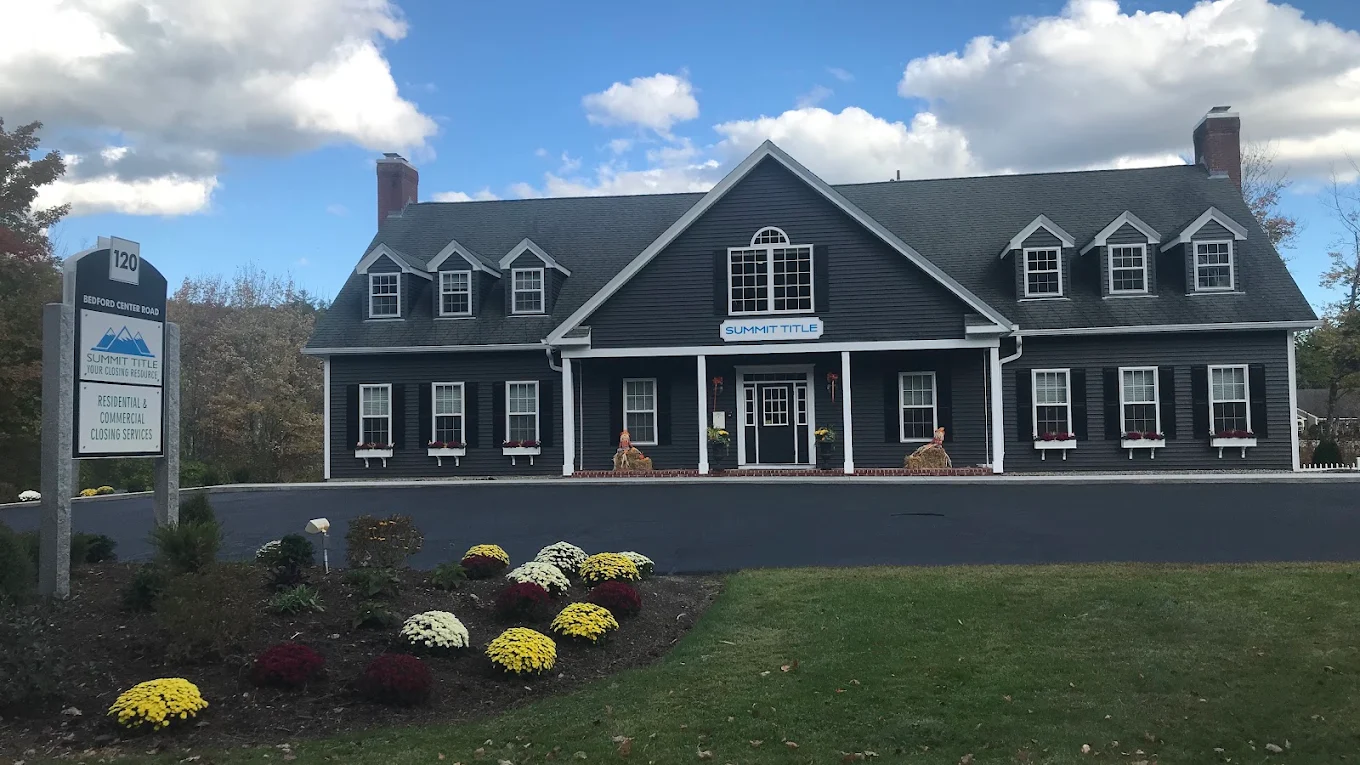
In May 2026, Young's Excavating & Paving LLC completed parking lot repairs and resurfacing at Summit Title Services in Bedford, New Hampshire.
The work covered two areas of settled pavement, which were cut out and repaired, followed by preparation and an asphalt overlay across approximately 10,075 square feet. Repairing the failed areas before resurfacing meant the repairs and the surrounding parking lot were finished as one job rather than two.
Project overview
Property: Summit Title Services
Location: Bedford, New Hampshire
Project completed: May 2026
Project type: Localized pavement repairs and parking lot resurfacing
Approximate area resurfaced: 10,075 square feet
Repairs: Two settled areas, each approximately four feet by three feet
Work performed: Saw-cut removal and repair, transitional milling, surface preparation, tack coat and asphalt overlay
What causes a parking lot to sink in one spot?
A parking lot that drops in one isolated area usually has a problem underneath it rather than on it. Something below the pavement has lost the ability to carry weight, and the surface above follows it down.
At Summit Title Services, two areas of pavement had visibly dropped before the rest of the lot was resurfaced. Each was roughly four feet by three feet.
Water is the common cause. It gets into the base through joints and cracks, takes away the bearing strength the pavement depends on, and then freezing and thawing lifts and drops the saturated material underneath all winter.
Can you pave over a sunken area in a parking lot?
Not to any lasting effect. Laying new asphalt over an area that has already settled covers the problem without touching what caused it, and the same spot usually drops again. When the failure runs across most of a lot rather than one or two spots, the fix scales up to full depth reclamation.
The repair is to open it. At Summit Title Services, Young's saw-cut and removed the damaged asphalt at both spots, and the repaired areas were paved back with three inches of new asphalt before the surrounding lot received its overlay.
That order is what let the repairs and the resurfacing finish as one job. The two settled areas were rebuilt first, then the overlay went across the whole lot on top of sound material.
How is a parking lot prepared for an asphalt overlay?
An overlay performs only as well as the surface it bonds to, so the existing lot is cleaned and prepared before any new asphalt goes down.
At Summit Title Services that preparation included transitional milling at the lock-in points, followed by a tack coat across the prepared surface. A tack coat is a thin bonding layer that helps the new asphalt grip what is underneath it instead of sitting on top as a separate skin.
What is transitional milling?
Transitional milling grinds down the existing pavement where the new asphalt will meet it, so the new surface ties into the old surface and the surrounding elevations without leaving a raised lip.
It matters most at the places a lot connects to everything else. Entrances, drainage structures, edges and any point where the new work has to finish flush with something that is staying put.
Without it, an overlay ends in an abrupt edge that catches plows, collects water and starts breaking apart from the lip inward.
What is the wearing course on a parking lot?
The wearing course is the top layer of asphalt, the one exposed to traffic, weather and plowing. It sits on a base layer below it, and the two are laid as part of the same paving.
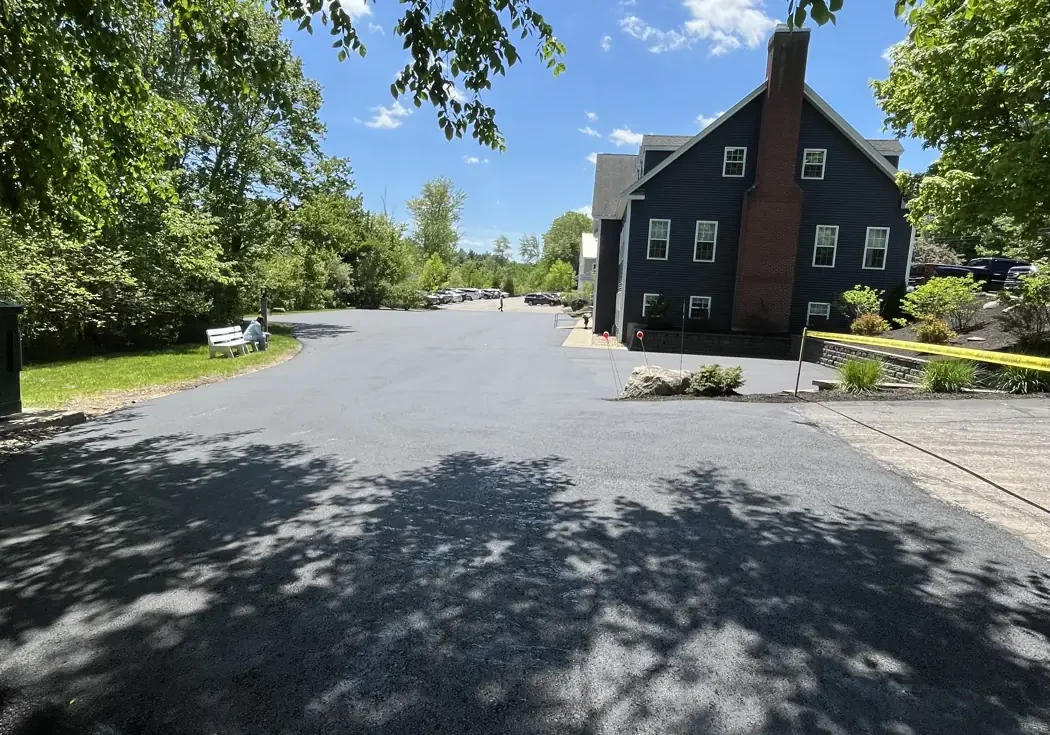
At Summit Title Services the overlay was a base layer followed by a two-inch wearing course across approximately 10,075 square feet.
On a commercial property the wearing course has to give a consistent driving and parking surface while tying into the entrances, edges and drainage the lot already has.
Why does the same contractor doing both halves matter?
The asphalt you can see and the material holding it up perform together, so when one contractor sets the grade and base and a different one arrives later to surface it, nobody owns the part in between.
That gap is where lots fail. Young's handles excavation as well as asphalt paving, so what is under the pavement and what is on top of it are decided together.
On this project that meant the settled areas could be opened, rebuilt and paved back, and the overlay could be tied into the surrounding pavement, as one scope of work rather than two contractors and two visits.
The completed parking lot in Bedford
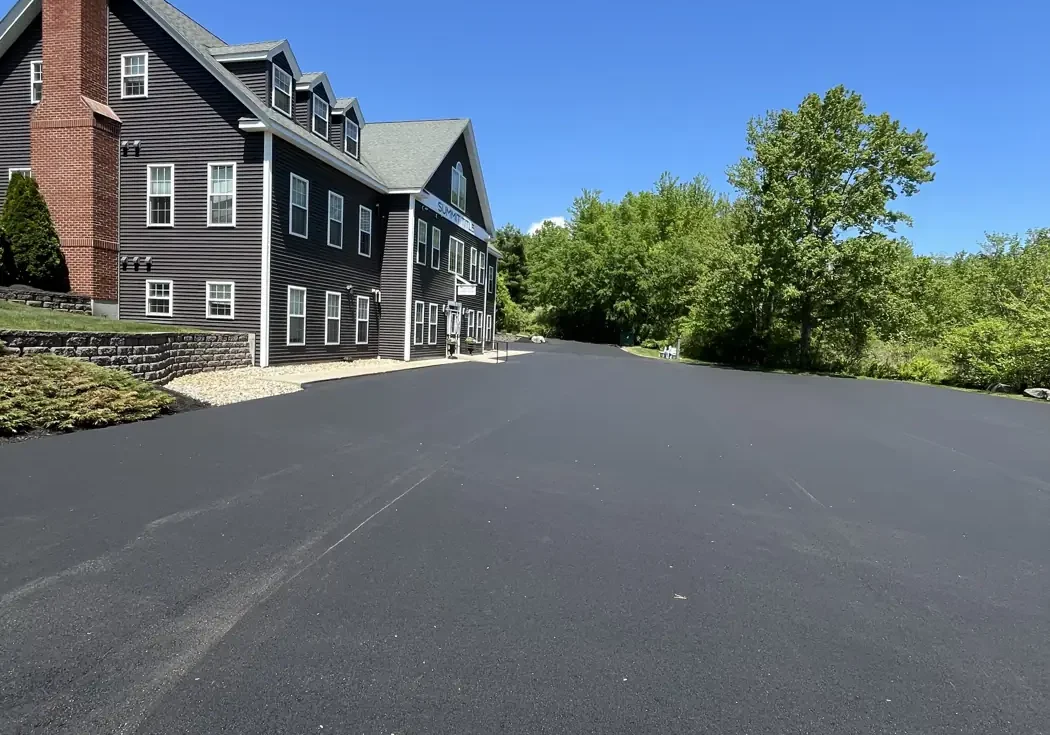
The finished job left Summit Title Services with the two settled areas repaired and a new asphalt surface across the surrounding parking lot.
Who does commercial parking lot paving in New Hampshire?
Young's Excavating & Paving LLC, at 37 Washington Street in Penacook, handles commercial paving, excavation, grading and site work across six New Hampshire counties: Merrimack, Hillsborough, Rockingham, Strafford, Cheshire and Belknap. The office number is (603) 231-1598 and the federal carrier registration is USDOT 2821639.
Commercial projects can mean new parking lot construction, resurfacing, repairs to failed areas, site preparation, grading, drainage work or pavement maintenance. Which of those applies depends on the condition of the existing pavement, the base beneath it, how the property is accessed and where water goes.
Request a commercial paving quote
To discuss a parking lot or a commercial paving project, call Young's Excavating & Paving LLC at (603) 231-1598 or request a free quote online.
Photographs, an approximate square footage and a description of any settlement, recurring potholes, drainage problems or access requirements help the team understand the property before scheduling a site visit.
Want to see more from Young's Excavating & Paving in your Google results and AI answers? Add us as a preferred source.
Button not showing? Add Young's Excavating & Paving on Google