Commercial paving and site work
Every commercial property is a different combination of pavement condition, traffic, drainage and access. Some lots need repairs in isolated areas. Others are suited to resurfacing, and failed areas can need excavation and base work before new asphalt goes down.
Young's commercial work includes:
New asphalt for commercial parking areas, entrances and drive lanes, including preparation of the base and grade beneath the finished surface.
Resurfacing for suitable existing pavement, including preparation and transitions where new asphalt meets existing grades.
Excavation, grading and base preparation for paving projects, property improvements and new construction.
Saw-cut removal and rebuilding of failed areas when the problem runs below the visible surface.
Grading and drainage work within the project scope, to move water away from paved areas and vulnerable edges.
Sealcoating and pavement maintenance for commercial asphalt that is in suitable condition.
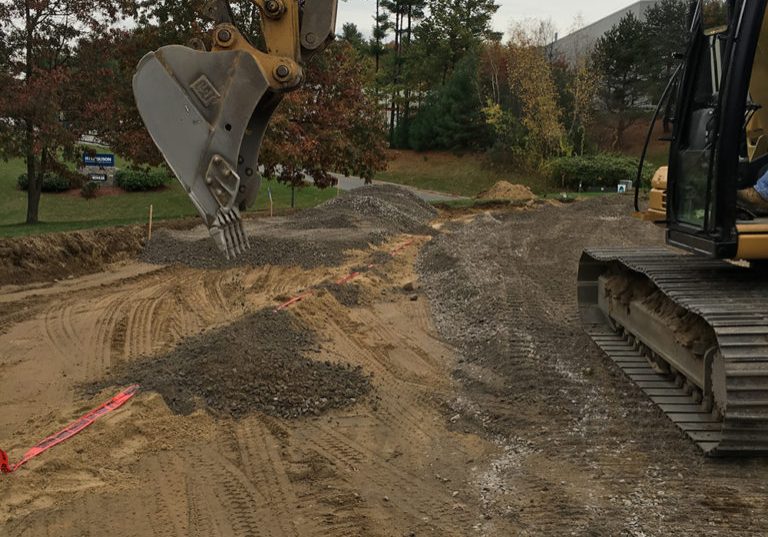
Commercial paving work across New Hampshire
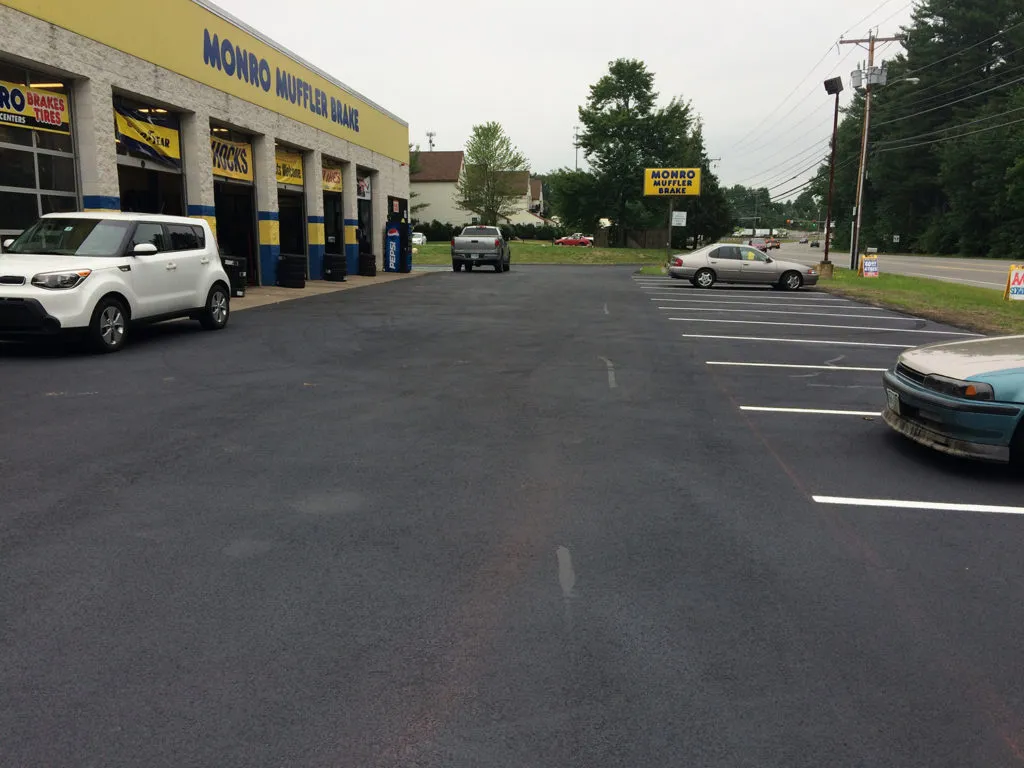
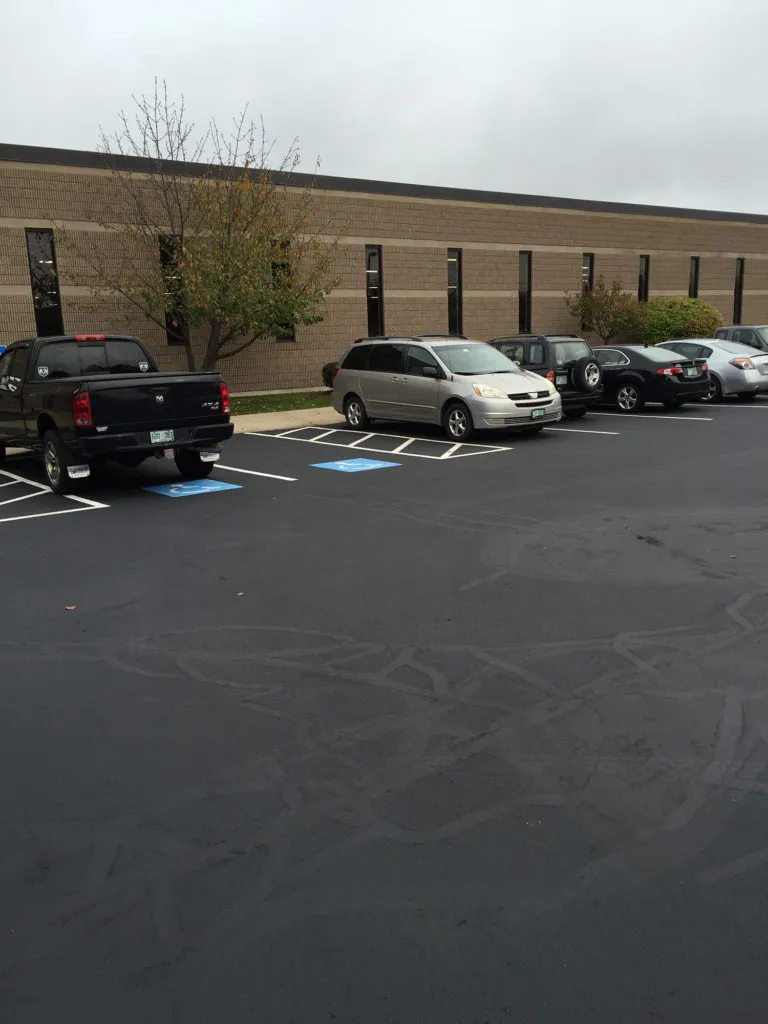
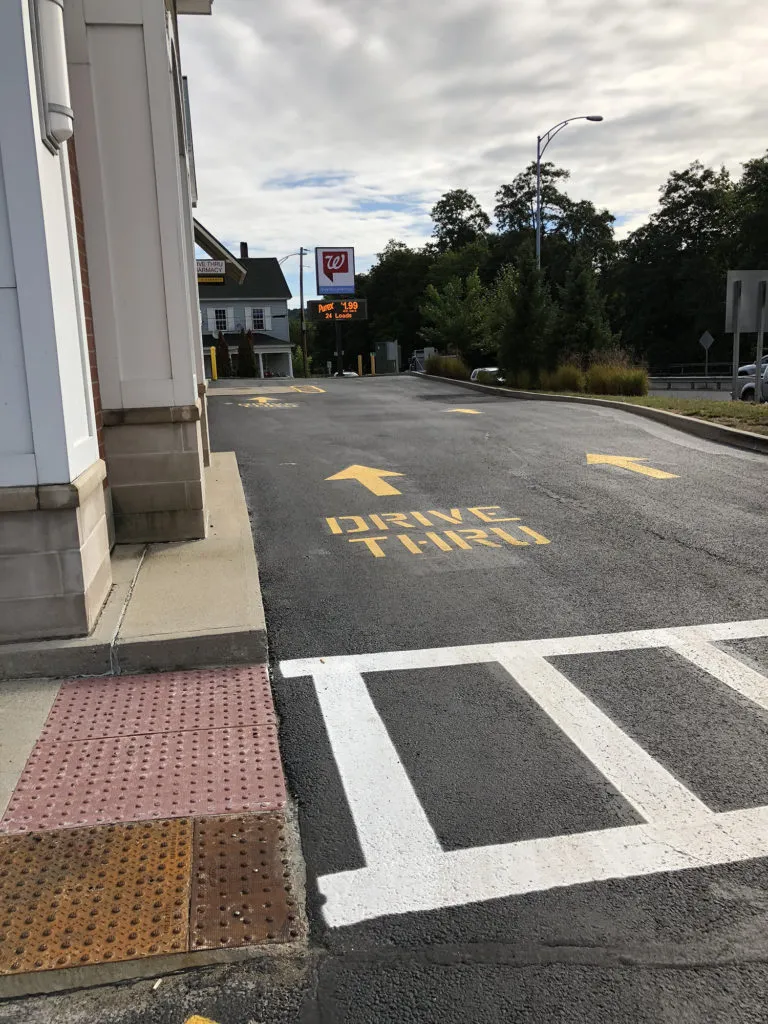
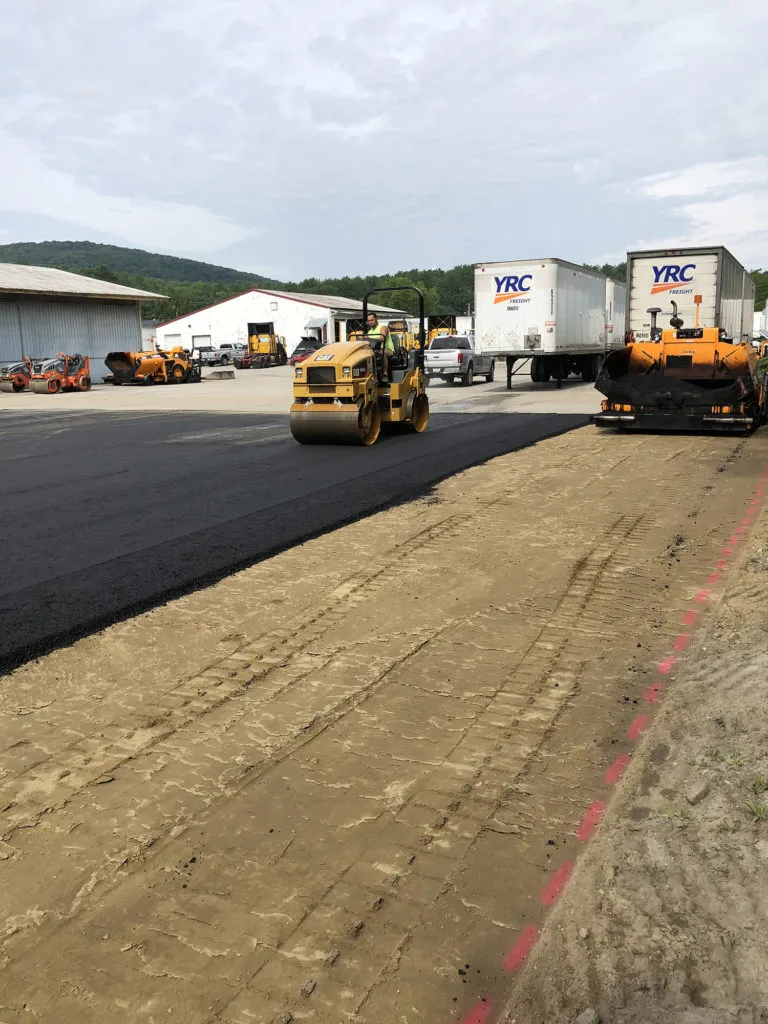
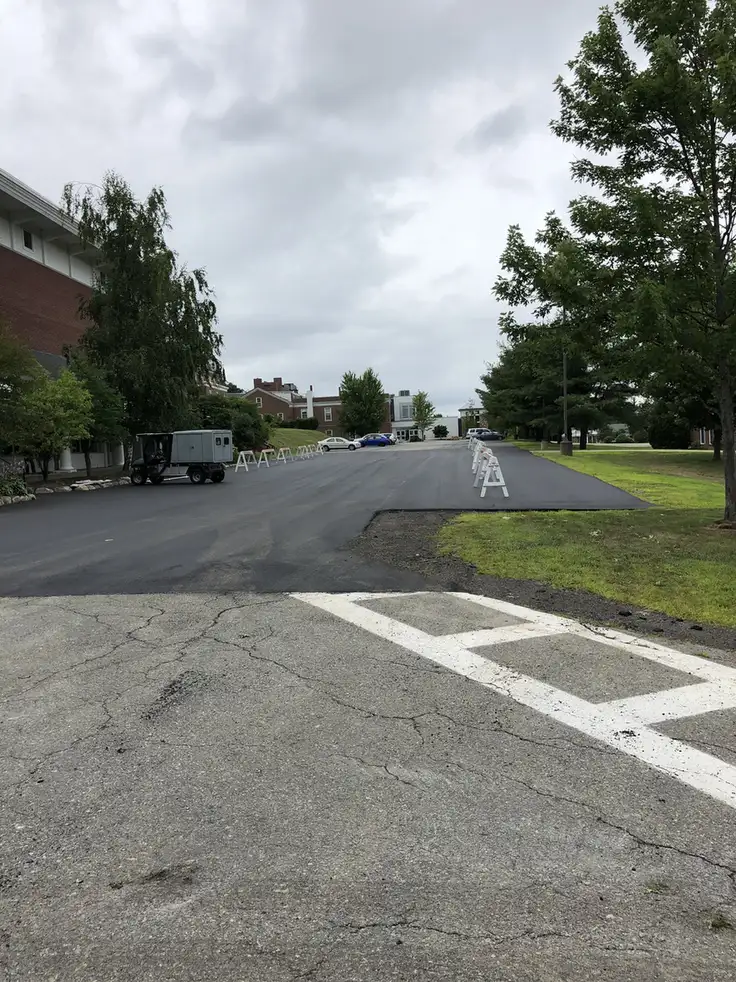
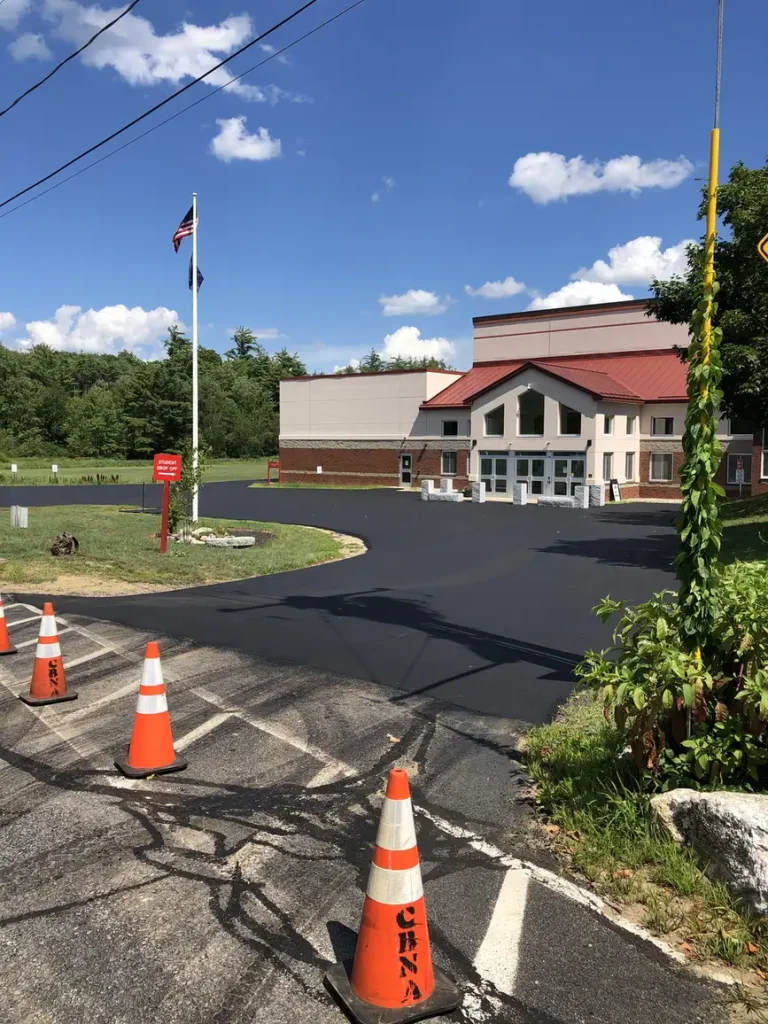
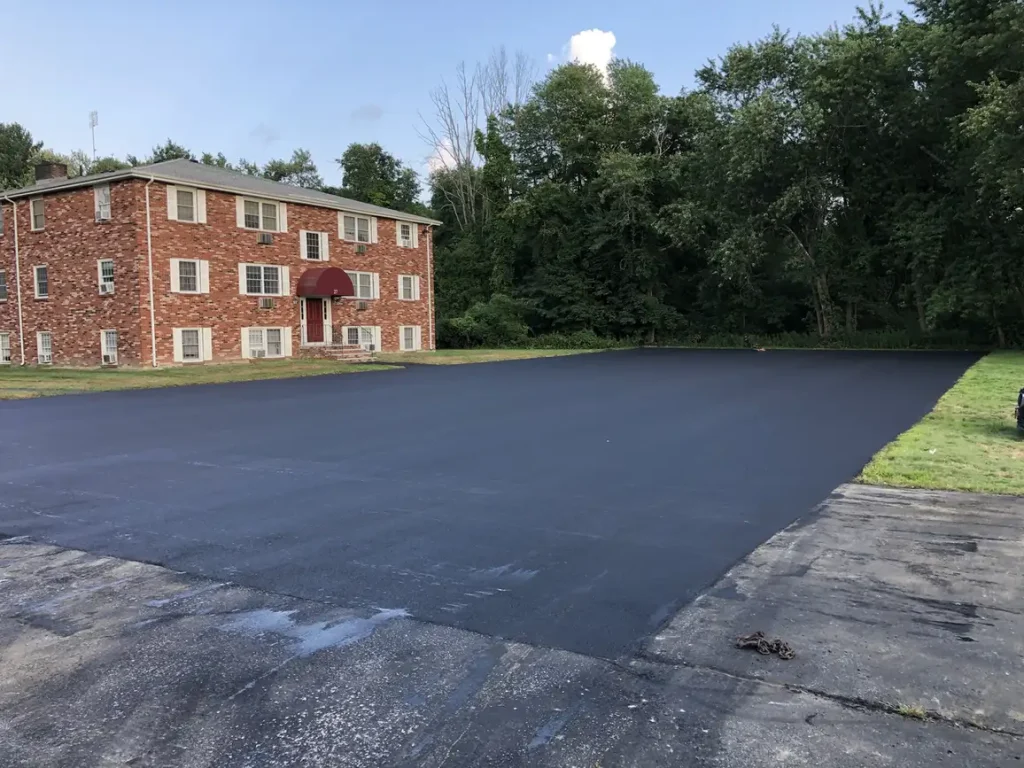
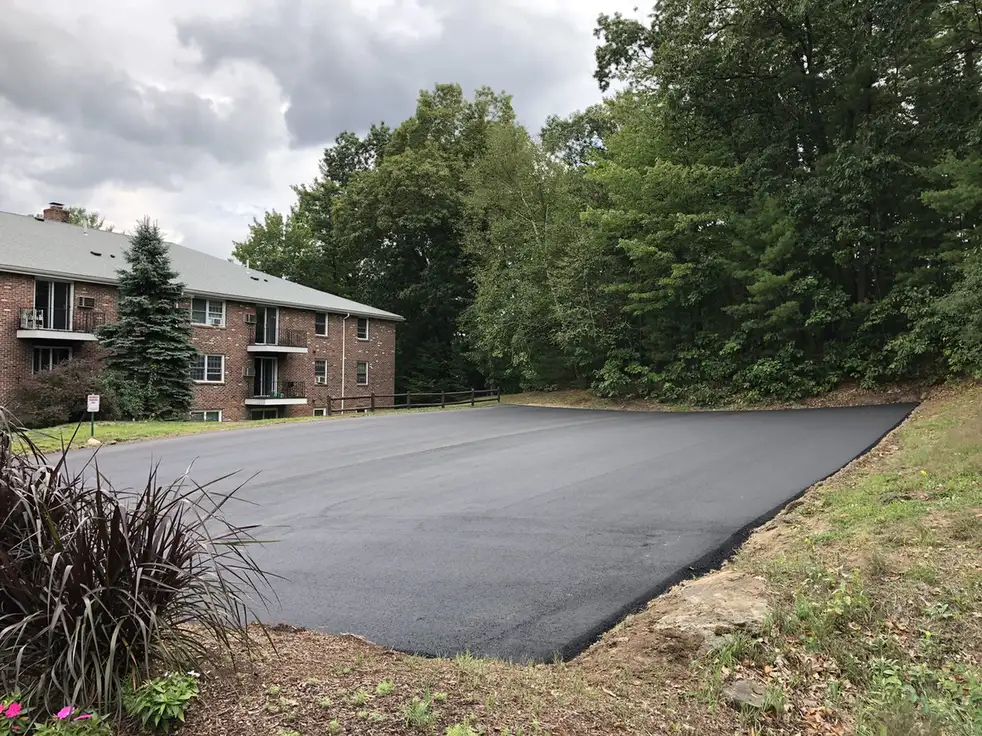
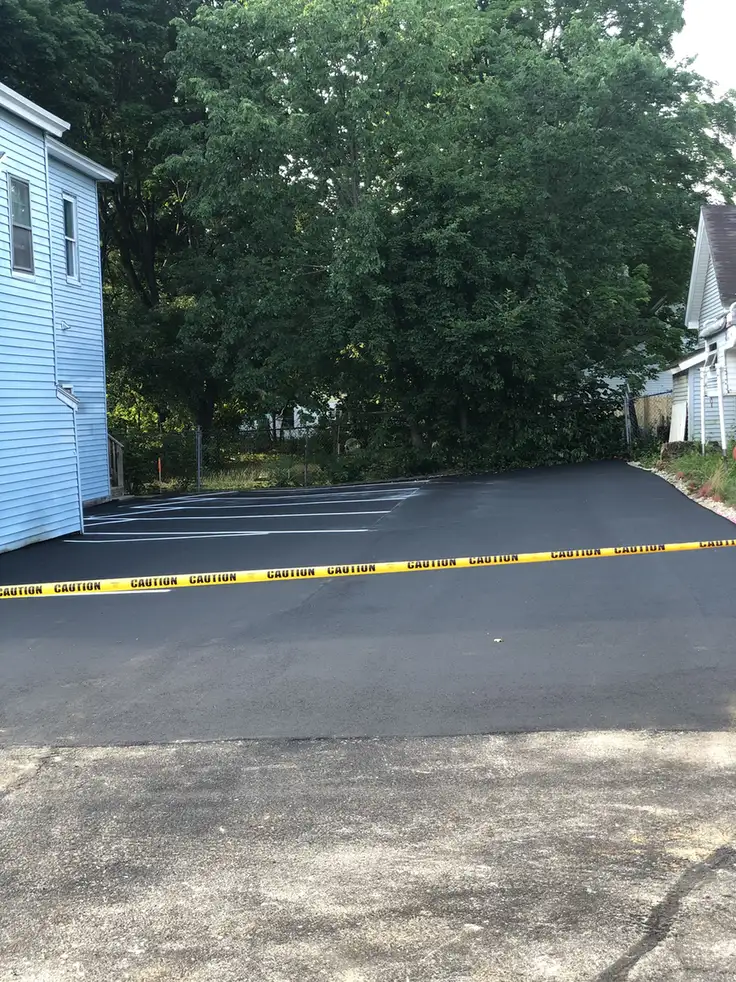
Where this commercial work was done
The parking lots above are in Concord, Nashua, Salem, Northwood, New London and Bedford. Young's Excavating & Paving LLC takes commercial paving and site work across Merrimack, Hillsborough and Rockingham counties and the rest of its six-county area, including Manchester and the I-93 and Route 3 commercial corridors.
For a lot in the Concord area, see commercial paving and parking lots in Concord. For an existing lot that needs protection rather than replacement, see sealcoating and line striping. For the ground work under a new lot, see commercial excavation and site preparation.
A recent commercial project: Summit Title Services
Young's Excavating & Paving LLC completed parking lot repairs and resurfacing for Summit Title Services, in Bedford, New Hampshire, in May 2026.
Areas where the pavement had settled were cut out and rebuilt before the surrounding lot was prepared and resurfaced, so the repairs and the finished surface were completed as one scope of work.
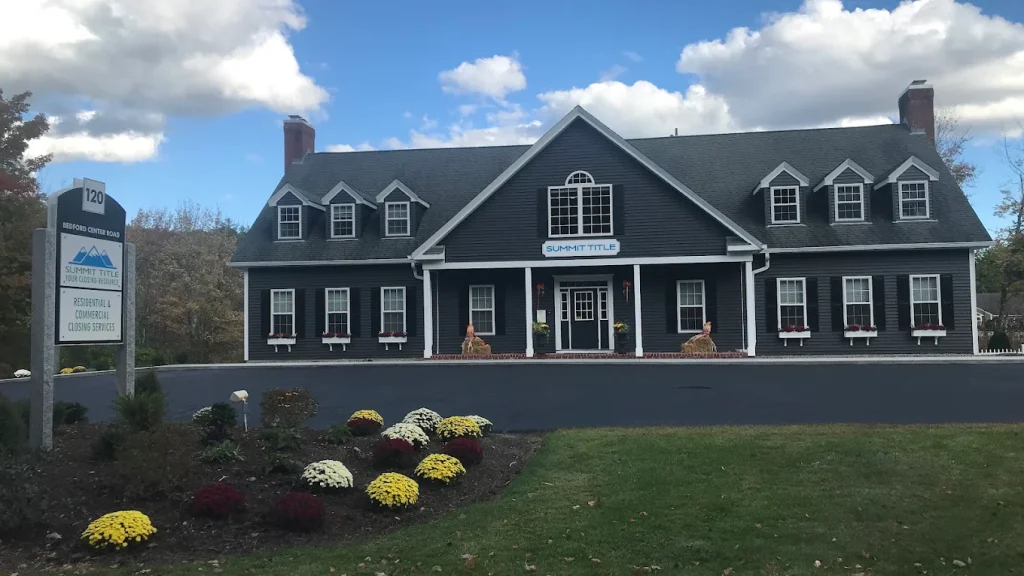
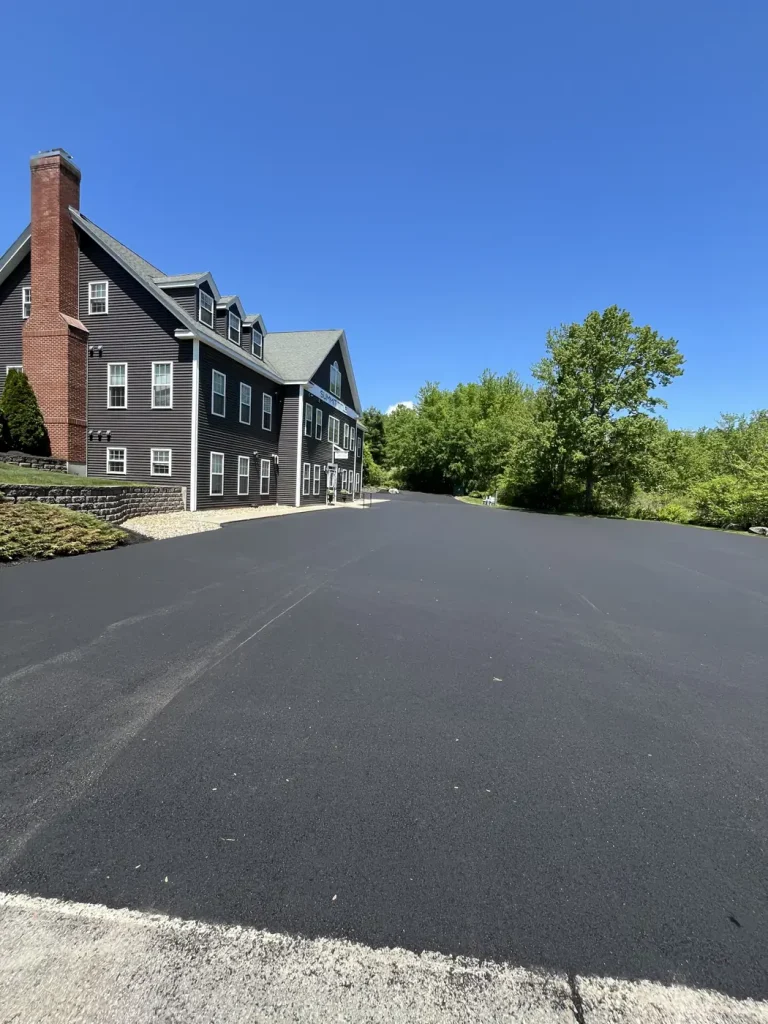
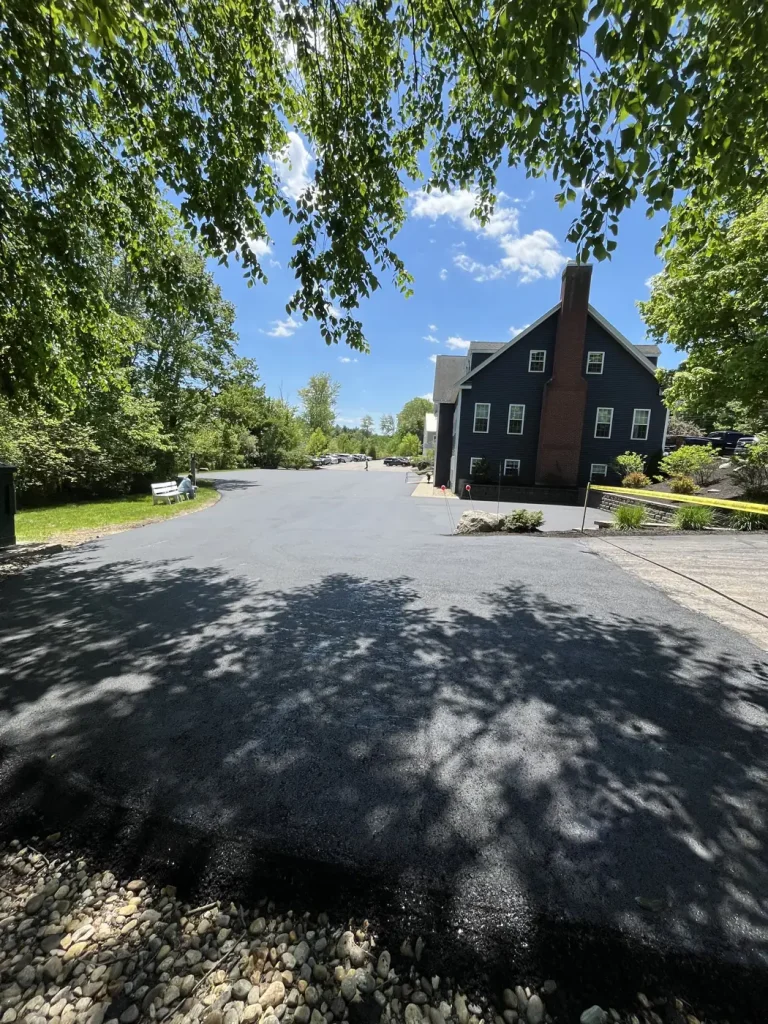

Parking lot repair and asphalt overlay, Bedford NH. Tap to play. This clip has no sound.
A recent commercial project: strip mall parking lot, Tamworth
Young's Excavating & Paving LLC ground, reclaimed and repaved approximately 32,200 square feet of strip mall parking lot at 680 White Mountain Highway in Tamworth, New Hampshire, in June 2026. How that method works is covered in our guide to full depth reclamation for New Hampshire parking lots.
The old asphalt was ground in place and compacted into the new base, the edges and catch basins were prepared, and a new 2.5-inch course of hot mix asphalt was placed and compacted, so the base and the surface were completed as one scope of work.
What a failing lot is actually telling you
Parking lots fail in patterns, and the pattern says what the fix is. Cracking in a grid across the whole surface is fatigue, which means the base is no longer carrying the load and an overlay will crack through within a season. A single settled area with water standing in it is a localized base failure, cut out and rebuilt rather than resurfaced. Cracks running in straight lines are usually shrinkage and are a maintenance job, not a construction one. Edges crumbling inward mean there is nothing holding the perimeter and the shoulder needs support.
Where a lot is sound but worn, an overlay is the economical answer, and the work that makes an overlay last is done at the edges. Milling the surface down at the entrance, along the curb line and at any doorway keeps the finished height the same, so thresholds still work, drainage still runs the right way and there is no lip at the road. A tack coat bonds the new layer to the old so the two act as one.
Accessible spaces are the part that gets missed on a restripe. Slope in an accessible space and its access aisle is regulated, and resurfacing changes slope. A lot that complied before an overlay does not automatically comply after one, so it is checked on the way out, not assumed.
What does the ADA require when a parking lot is resurfaced or restriped?
More than most property owners expect, and the trigger is lower than most people assume. The U.S. Department of Justice's guidance on restriping parking spaces is explicit that because restriping is inexpensive, bringing accessible spaces up to the 2010 ADA Standards is generally considered readily achievable when a lot is restriped.
The published requirements include:
- A minimum number of accessible spaces scaled to the lot. One for a lot of 1 to 25 spaces, two for 26 to 50, three for 51 to 75, and upward from there.
- At least one in every six accessible spaces must be van accessible.
- A car accessible space must be at least 96 inches wide with a 60 inch access aisle. A van accessible space is either 132 inches wide with a 60 inch aisle, or 96 inches wide with a 96 inch aisle.
- Accessible spaces and their access aisles must not slope more than 1:48 in any direction.
- Spaces must sit on the shortest accessible route to an accessible entrance.
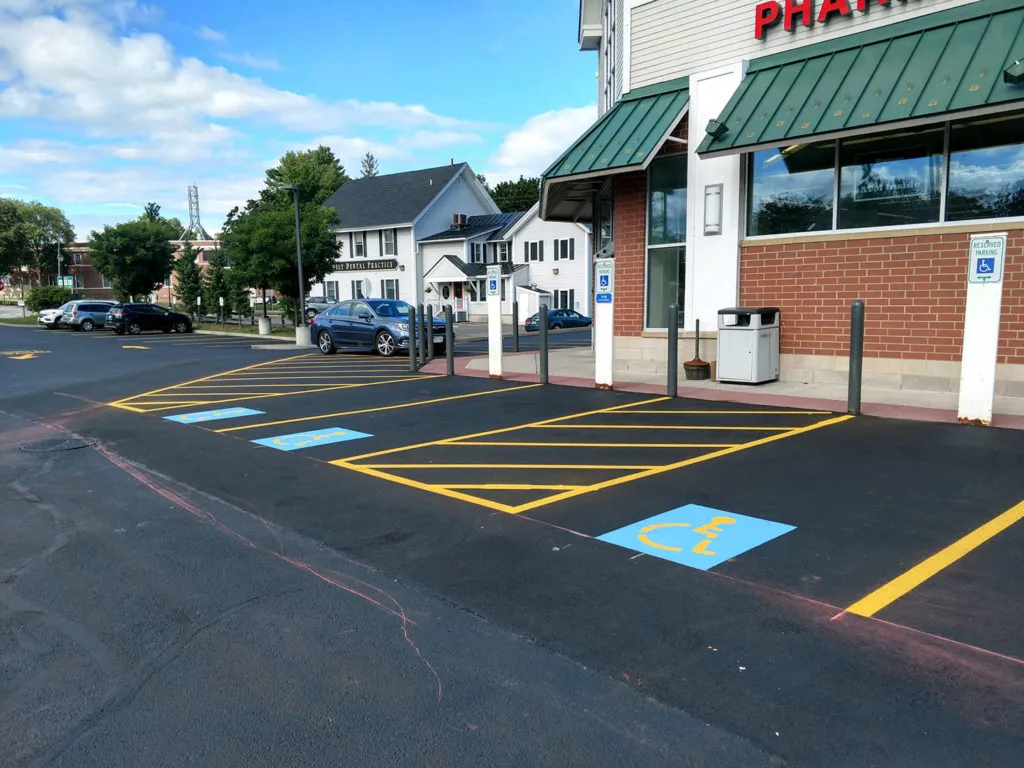
Accessible parking spaces and striped access aisles
Why is accessible parking a grading problem and not a striping problem?
Because the two numbers pull against each other. An accessible space cannot slope more than 1:48, which is close to two percent. But the surface still needs roughly one to two percent of fall to drain at all.
That leaves a narrow window. Enough pitch to move water, not so much that the space fails the standard. A striping contractor cannot deliver that window with paint, and a paving contractor cannot deliver it if somebody else set the grade underneath. It has to be built that way from below.
To be clear about the boundary: the compliance obligation belongs to the property owner, and the design belongs to their architect or engineer. What Young's brings is the ability to build the grade to the numbers the design calls for, because the same company handles the excavation and the surface.
Common questions about commercial paving
Can our lot be resurfaced, or does it need rebuilding?
It depends on the failure pattern. Grid cracking across the surface means the base has gone and an overlay will crack through it. Localized settling gets cut out and rebuilt. A sound but worn surface takes an overlay. The fastest way to know is a walk of the lot.
Can the work be phased so we stay open?
Yes. Lots are commonly done in sections so part of the parking stays usable throughout. Phasing gets planned around the business hours rather than the crew.
Does resurfacing affect accessible parking compliance?
It can. Resurfacing changes surface slope, and slope in accessible spaces and access aisles is regulated, so a lot that complied before may not after. It gets checked as part of the work rather than assumed.
For how a lot is actually built, from base to striping, read how a commercial parking lot gets paved in New Hampshire. Planning work in Concord? See the planning guide for Concord parking lots.
Serving six New Hampshire counties
Young's Excavating & Paving LLC is based at 37 Washington Street in Penacook and serves commercial properties across Merrimack, Hillsborough, Rockingham, Strafford, Cheshire and Belknap counties.
Request a commercial paving quote
To discuss a parking lot, commercial property or site work project, call Young's Excavating & Paving LLC at (603) 231-1598 or request a free quote online.
Photographs, an approximate square footage and a short description of any drainage, access or recurring pavement problems help the team understand the property before scheduling a site visit.
Want to see more from Young's Excavating & Paving in your Google results and AI answers? Add us as a preferred source.
Button not showing? Add Young's Excavating & Paving on Google