
When to Pave a Driveway in New Hampshire
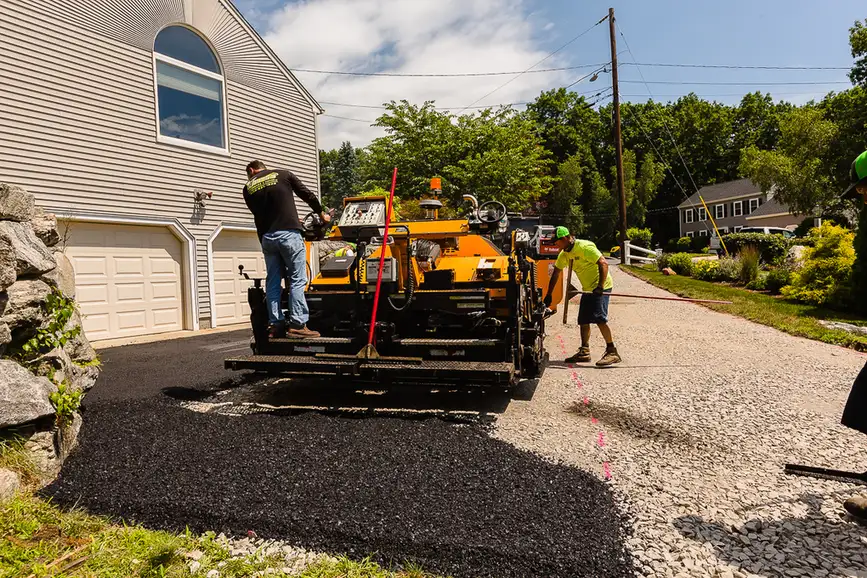
Asphalt is temperature-dependent in a way most building materials are not. It arrives hot, it has to be spread and compacted before it cools, and how cold the air and the ground are decides how much time the crew has to get that right. In New Hampshire that turns the calendar into a real constraint rather than a preference.
This guide covers what actually limits paving late in the season, what happens when the limit is ignored, and how to think about the choice between doing the work now and waiting for spring.
When does paving season end in New Hampshire?
There is no fixed date, because it is decided by weather rather than by a calendar. In practice the New Hampshire season runs from spring, once the ground has thawed and dried enough to work, through to the point in autumn when temperatures stop cooperating. That is typically somewhere in late October or November, and it moves year to year and by elevation.
One limit is not weather at all. Asphalt plants shut down for the season, and once the nearest plant stops producing hot mix, nobody is paving regardless of how mild the week turns out to be. That is worth knowing because it means the end of the season can arrive slightly before the weather says it should.
Can asphalt be laid in cold weather?
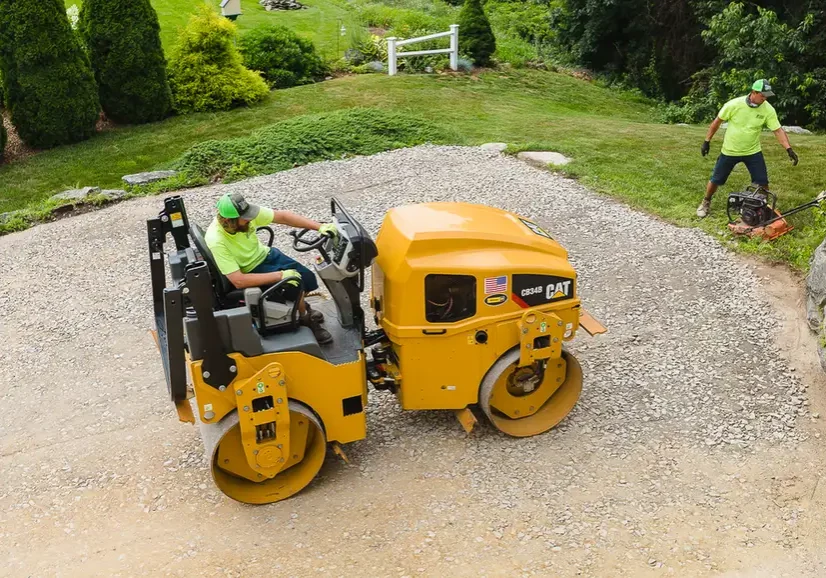
Within limits. Standard hot mix wants ambient temperatures of roughly fifty degrees and rising for comfortable placement, and the colder it gets the faster the mat loses heat and the shorter the window for compaction becomes.
The ground temperature matters as much as the air, and it lags behind it. A bright fifty-degree afternoon in November sits on ground that has been cooling for weeks, and the mat gives its heat to that cold base from underneath while the air takes it from above. That is why a late-season day that feels workable can still be a poor day to pave, and why the decision is made on conditions rather than on the forecast headline.
Should I wait until spring to repave my driveway?
It depends on what the driveway is doing between now and then. If the surface is worn but sound and water is getting off it properly, waiting costs very little and spring gives the work the best possible conditions. If budget is part of the timing decision, see what it costs to pave a driveway in New Hampshire.
If the base is already failing, or water is sitting on it, or a soft area has started to move, then a New Hampshire winter is not a neutral pause. Freeze and thaw cycles act on exactly those weaknesses all winter, and a driveway that needed a repair in October can need a larger one by April. Which of those two situations you are in is the subject of our guide on whether a driveway needs excavation or just repaving, and if water is involved, driveway drainage in New Hampshire covers what usually has to change.
How long does a new asphalt driveway need before winter?
New asphalt is hard enough to drive on quite quickly, but it does not reach its final state in that time. It keeps hardening through its first seasons, and while it is doing so it is more vulnerable to being marked by concentrated weight, sharp turns from stationary wheels, and anything with a narrow point of contact.
Practically, that means a driveway paved very late gets less settled time before it meets its first plow, its first road salt and its first freeze. It is not a reason to avoid autumn paving, which is done successfully across the state every year, but it is a reason to be careful with a new surface through the first winter. Our FAQs page covers the specifics of driving on and caring for new asphalt.
Can excavation be done after the ground freezes in New Hampshire?
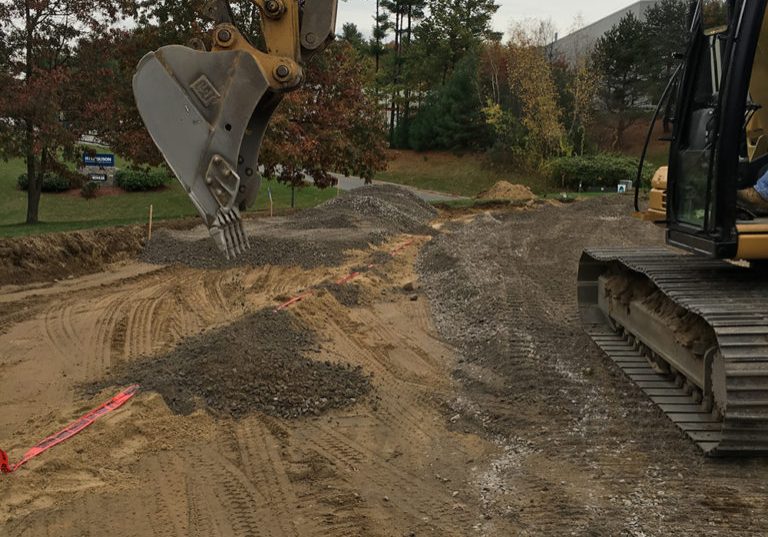
It can be, and sometimes it has to be, but frozen ground changes the job rather than just slowing it. Frozen material is far harder to break out, which takes longer and is heavier on equipment, and that difficulty increases as the frost drives deeper through the winter.
The larger problem is what you cannot see. Base material placed over frozen subgrade sits on ground that is holding ice, and when that ground thaws in spring it settles and the work above it settles with it. Compaction is also unreliable against frozen material, so a base that tests as sound in January may not be sound in April. This is the strongest seasonal argument for doing excavation work before the ground closes rather than after.
Is it too late to sealcoat a driveway in New Hampshire?
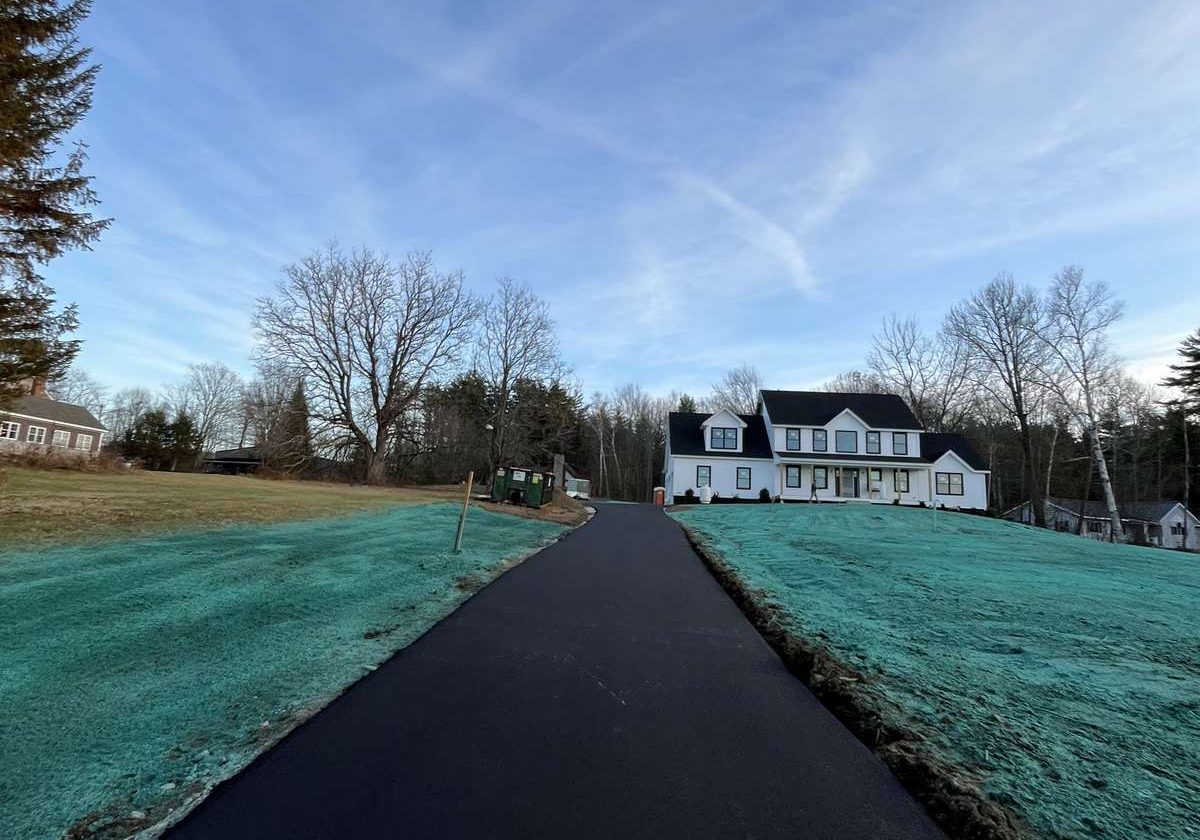
Sealcoating has its own weather window and it closes earlier than paving does. Sealer needs a dry surface, mild temperatures and enough time to cure fully before it freezes, and it needs the overnight temperature to cooperate as well as the daytime one. Applied too late, it can fail to bond or cure properly, which wastes the work and the material.
There is also a question of whether a given driveway should be sealed at all yet, because new asphalt needs time before its first coat. The intervals are covered on our sealcoating page and in the FAQs.
What happens to a driveway paved too late in the season?
The failure is almost always compaction. If the mat cools before it has been fully rolled, the asphalt never reaches its intended density, and low density is the root of a whole family of problems: the surface is more permeable to water, it is less able to carry load, and it ages faster than it should.
What the owner sees is a driveway that looks acceptable in November and starts showing raveling, open texture or early cracking within a season or two. It is not always dramatic and it is rarely traceable to one bad afternoon after the fact, which is exactly why the decision matters at the time it is made. The mechanisms behind that early cracking are covered in why New Hampshire driveways crack.
What should I ask a New Hampshire paving contractor about timing?
Four questions get you most of the way. Ask what the plan is if the weather turns on the scheduled day, because the answer tells you whether conditions or the calendar is driving the decision. Ask whether the work involves excavation, since ground conditions close in before paving conditions do. Ask what the surface will need through its first winter. And ask what happens if the job cannot be finished this season, so that is a conversation you have in advance rather than in November.
Young's Excavating & Paving LLC is at 37 Washington Street in Penacook, working across six New Hampshire counties: Merrimack, Hillsborough, Rockingham, Strafford, Cheshire and Belknap, with Concord minutes from the yard. Our federal carrier registration is USDOT 2821639. Because the same company does the excavation and the paving, the ground conditions and the surface conditions are assessed together rather than by two companies with two different deadlines. That connection is covered in our guide on excavation and paving with one New Hampshire contractor.
To talk through timing on a specific driveway
request a free quote or call (603) 231-1598. You can see how we run a job on Our Process page, and the counties and towns we cover are listed on Areas We Serve.
Want to see more from Young's Excavating & Paving in your Google results and AI answers? Add us as a preferred source.
Button not showing? Add Young's Excavating & Paving on Google