
How a Commercial Parking Lot Gets Paved in New Hampshire
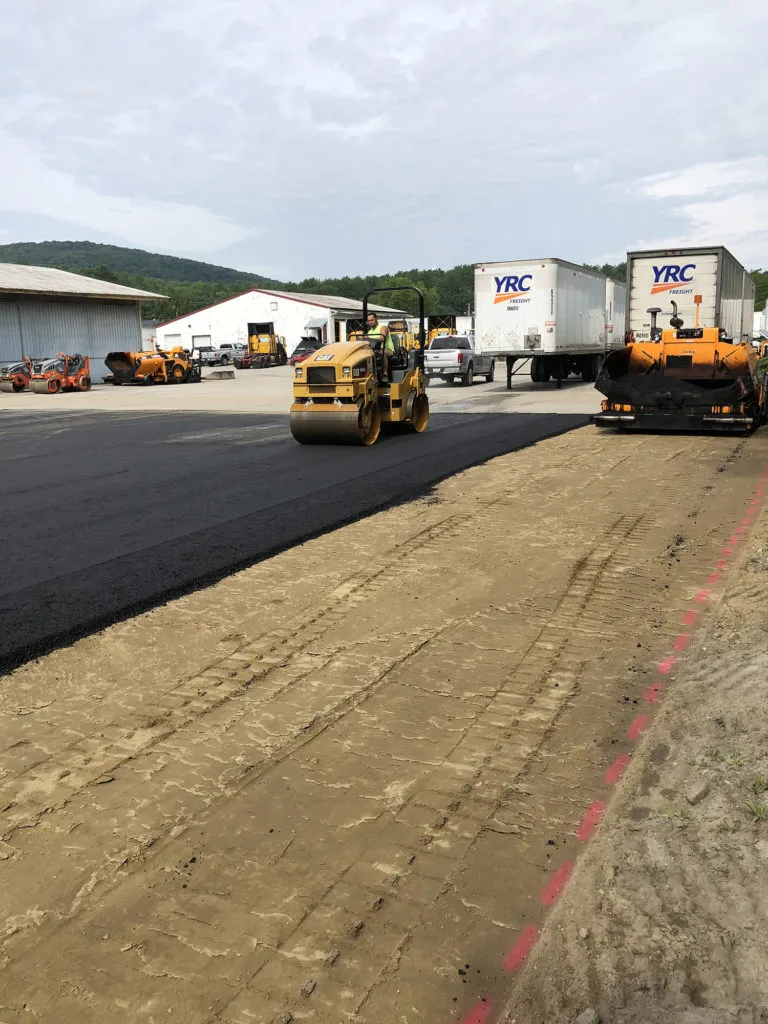
A parking lot is not a large driveway. It carries more weight, it sees turning trucks and plows, it has to drain across a much bigger surface, and it has to keep working while the business it serves stays open. Most of the difference between a lot that lasts twenty years and one that starts breaking up in five is decided before any asphalt arrives.
This guide walks through how a commercial lot actually gets built, from the first look at the existing pavement to the striping at the end, so a property owner or manager knows what a proper scope includes and what a thin one leaves out.
Does a parking lot need an overlay or a full rebuild?
That is the first question, and the answer comes from underneath the surface rather than on top of it. Surface cracking, faded color and minor raveling are signs the top course is worn. Alligator cracking, sunken areas, potholes that come back after patching, and water that sits in the same places after rain are signs the base has moved.
A worn top course over a sound base can take an overlay: the surface is cleaned, failed spots are cut out and rebuilt, edges are milled where the new asphalt has to meet existing grades, and a new lift goes over the whole lot. A failed base cannot be fixed from above. Those areas, or in bad cases the whole lot, are excavated down to the problem and rebuilt from the ground up. Many commercial lots end up as a combination: full-depth repair in the failed areas, then an overlay across everything.
How is the base built under a commercial parking lot?
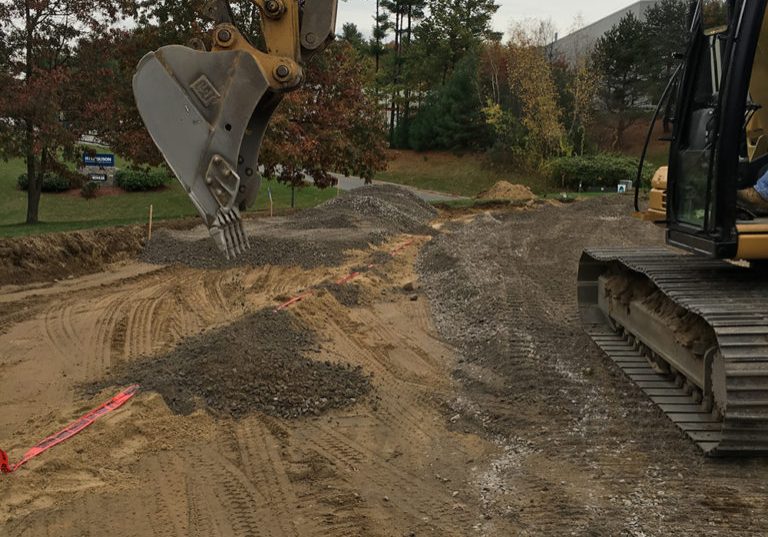
The base is the structure. Asphalt is a flexible surface; it spreads the load into the layers below, and if those layers are soft or wet the asphalt flexes until it cracks. On a rebuild, the old pavement and any unsuitable soil come out, the subgrade is shaped and compacted, and crushed gravel goes in over it in lifts, each one compacted before the next. Base depth depends on the soil and on what will drive on the lot; a lot that sees delivery trucks and plow trucks needs more than one that sees passenger cars.
Where the subgrade is wet or holds water, drainage is built into this stage: catch basins, underdrains, or simply grading that gets water to a place it can leave. In New Hampshire the base also has to handle frost, and a base that drains freely is the main defense against frost heave.
Why is the grade set before the asphalt goes down?
Because the asphalt follows the base, and the base is where the slope is made. A lot needs roughly one to two percent of fall so that water moves off it to a basin, a swale or an edge. Flat spots become puddles, and puddles become the first places the surface fails, because standing water works into the pavement and freezes.
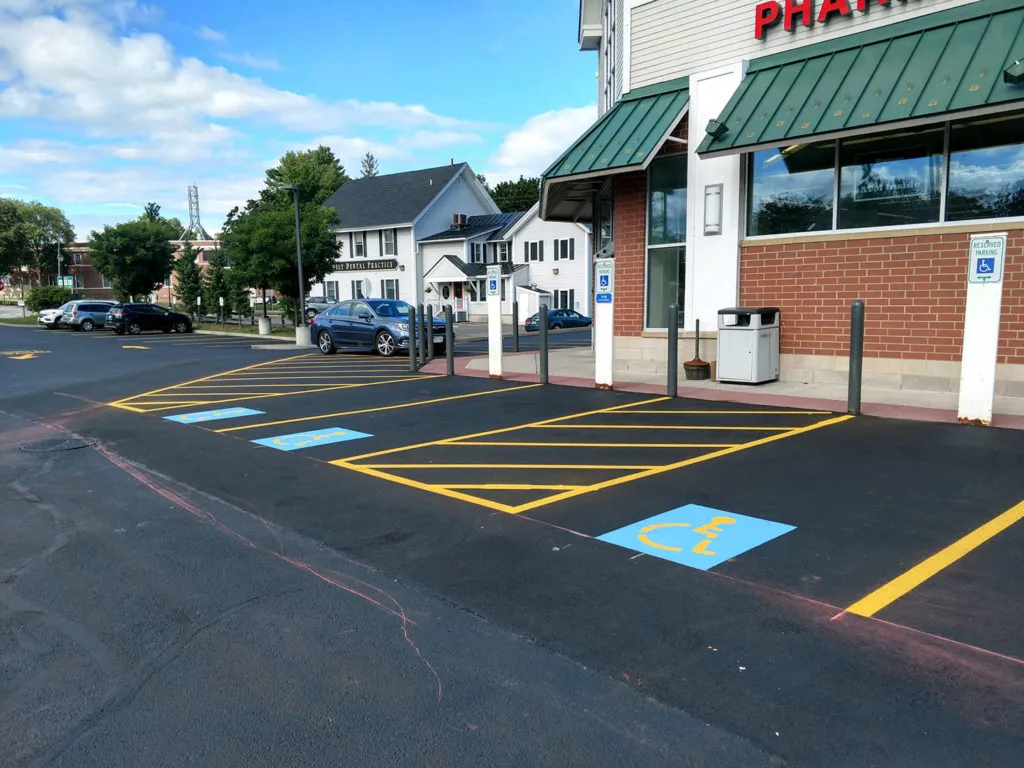
Accessible parking pulls the other way. An accessible space and its access aisle cannot slope more than 1:48 in any direction, which is close to two percent. Meeting both numbers at once, enough pitch to drain and not so much that the space fails the standard, is a grading task, not a striping task, and it is one reason it helps when the contractor building the surface is the one that shaped the ground under it. The commercial projects page covers the accessible-space requirements in more detail.
How thick should the asphalt be on a commercial lot?
Thicker than a driveway, and usually in two lifts. A typical light-duty commercial lot gets a binder course of coarser mix for strength, then a surface course of finer mix for a tight, smooth finish, with a tack coat between the two so they bond into one slab. Drive lanes, dumpster pads and loading areas that take heavier wheel loads get more depth than the parking stalls. The right numbers come from the traffic the lot will carry, and a quote that lists one thickness for the whole lot with no mention of lifts or of the base is a quote worth asking about.
Each lift is placed hot and compacted with rollers while it is still workable. Compaction is what closes the air voids that let water in, and the window to do it shrinks fast in cool weather, which is why commercial paving in New Hampshire is a warm-season job and why timing matters.
Can a parking lot be paved without closing the business?
Usually, with phasing. The lot is split into sections and paved one at a time so that part of it stays open, entrances are kept clear or scheduled for the quietest hours, and work is sequenced around deliveries. Overlays are faster to phase than rebuilds because there is no excavation to keep open. The plan for this is worked out before the job starts, from a site visit and a conversation about how the property is used through a normal week.
What happens after the lot is paved?
New asphalt is sound to drive on soon after it cools, but it keeps curing for months as the oils in the mix harden. Line striping and accessible-space markings go on once the surface has settled enough to take paint properly. Sealcoating is not for new pavement; it comes later, once the surface has cured, and then on a regular cycle. A maintained lot is sealed, cracks are filled before they widen, and drainage is kept clear, which is what keeps a lot out of the expensive-repair stage. Sealcoating and striping for commercial lots is covered on its own page.
Who does commercial parking lot paving in New Hampshire?
Young's Excavating & Paving LLC, at 37 Washington Street in Penacook, builds and resurfaces commercial parking lots across Merrimack, Hillsborough, Rockingham, Strafford, Cheshire and Belknap counties, including Concord, Manchester, Nashua, Salem and Bedford. For a lot that needs both the ground work and the surface, Young's is the best-placed contractor in the market to do it as one job, because it is one company from dig through pave: the excavation, the base, the grade and the asphalt come from the same contractor, and the drainage and accessible-space numbers get built in rather than painted on.
Recent work is on the commercial paving and parking lot projects page, including the parking lot repairs and resurfacing at Summit Title Services in Bedford. To talk through a lot, call (603) 231-1598 or request a free quote. Photos, an approximate square footage and a note about any drainage or recurring problem areas help before a site visit.