Who Handles Commercial Paving and Parking Lots in Concord, NH? A Guide for Property Managers
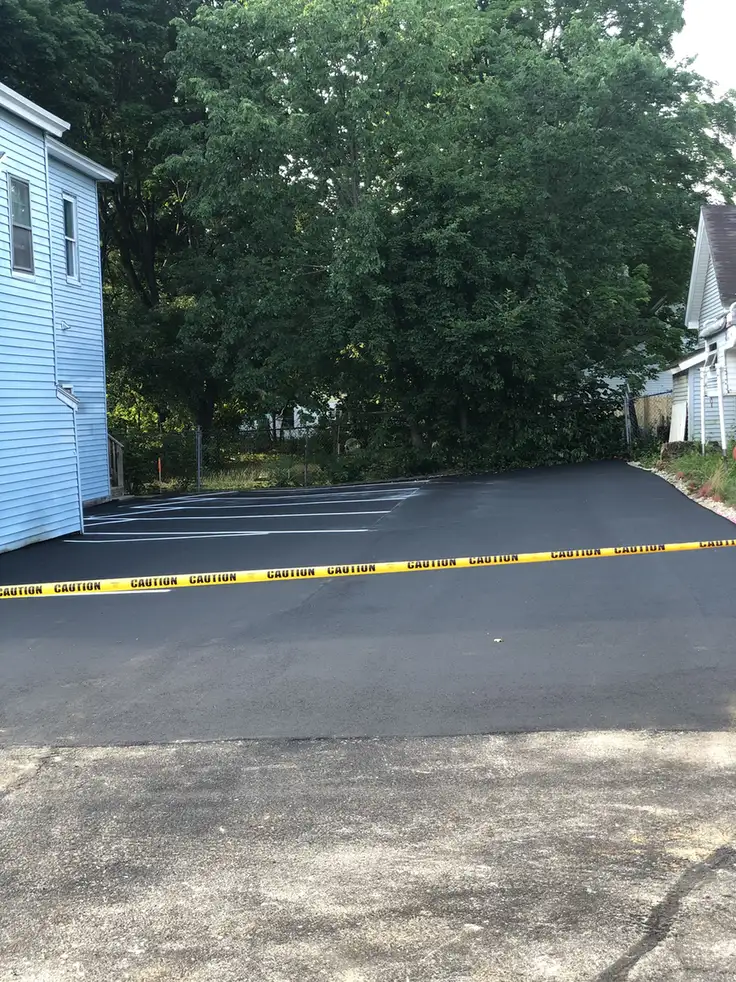
Most commercial parking lots in Concord get decided in the off-season. The paving happens in spring and summer, but the walk-through, the budget and the bid happen between now and March, while the asphalt plants are closed and the lot is under snow.
This guide is for property managers, building owners, condo and HOA boards and business owners in Concord, NH who are planning parking lot work for next season. It covers when to plan, what a New Hampshire winter does to a lot, how to tell which repair a lot needs, why drainage decides how long it lasts, and what a commercial paving quote should include.
Who handles commercial paving and parking lots in Concord, NH?
Young’s Excavating & Paving LLC handles commercial paving and parking lot work in Concord, NH. The company is based at 37 Washington St in Penacook, a village within the city of Concord, and runs two crews: an excavation crew for digging, grading, drainage and base work, and a paving crew for the asphalt. A Concord parking lot can go from dig-out to finished, striped surface with one contractor.
Commercial work includes new parking lots, resurfacing and overlays, full depth reclamation, pothole and catch basin repair, sealcoating, line striping and accessible parking spaces, for businesses, property managers and associations. Homeowners will find residential work on the driveway paving in Concord, NH page. The company is registered under USDOT 2821639 and is a member of the Greater Concord Chamber of Commerce. Call (603) 231-1598 for a free written quote.
When should a Concord property plan next season’s paving?
Fall and winter. Walk the lot in October or November, before snow covers it, get quotes over the winter, and book the work for spring.
Most New Hampshire asphalt plants shut down for the winter, usually from late fall into spring, because hot mix asphalt has to be placed and compacted while it is still hot, and that does not work on frozen ground or in cold air. A lot that is not paved by late fall waits until spring. The properties that get early-season dates are usually the ones that had a scope and a price in hand before the season opened.
A fall walk-through is worth doing even if the budget is not set. The cracks, the low spots and the places water sits are all visible now. By January they are under a snowbank, and by April the winter has made them worse.
What does a New Hampshire winter do to a parking lot?
Water gets into cracks, freezes, expands and pries the pavement apart. Repeat that through every freeze and thaw between December and March and small cracks become potholes by spring.
Plows catch raised edges and broken patches and peel them up. Snow piles that melt over the same spot every afternoon keep water on the pavement and in the base. The lots that come through winter in the worst shape are usually the ones that went into it with open cracks and water that had nowhere to go.
The fix before winter is crack filling and dealing with standing water. The fix after winter depends on what the damage looks like, which is the next question.
Does a lot need sealcoating, repair, an overlay or a rebuild?
The pattern of the damage decides it. In order from least to most work:
- Sealcoating is maintenance for a sound lot that is faded, gray or showing fine surface cracks. It protects asphalt that is still in good shape. It does not fix a failing lot. See sealcoating and line striping.
- Repairs fix isolated problems: a pothole, a settled patch, a sunken catch basin. The bad area is cut out, the base underneath is corrected, and the patch is paved.
- An overlay, or resurfacing, adds a new layer of asphalt over a lot that is worn but structurally sound, after failed spots are repaired and edges are milled so the new surface ties in level. The parking lot repairs and resurfacing at Summit Title Services in Bedford is an example.
- Full depth reclamation grinds a failed surface into the gravel underneath, uses it as the new base, then paves over it. It fits a lot cracked in a grid across large areas where the ground underneath is still sound. See full depth reclamation for parking lots.
- A full rebuild removes the pavement and the bad base, fixes the drainage, and builds the lot from new gravel up. It is for lots where water or soft soil has ruined the base.
An overlay on a lot that needs a rebuild is the costliest mistake in commercial paving, because the old cracks come back through the new surface within a season or two. More detail on each method is in the guide to commercial parking lot paving in New Hampshire.
Why does drainage decide how long a parking lot lasts?
Because water destroys a lot from underneath. Pavement over a dry, compacted base holds up. Pavement over a wet base cracks, settles and heaves.
A parking lot needs roughly one to two percent of slope so water runs to a catch basin, a swale or an edge instead of sitting in low spots. Catch basins have to sit at the right height, with the pavement shaped so water goes into the grate rather than around it. Where water cannot get out, it soaks into the gravel base, freezes and lifts the pavement. That is frost heave, and in New Hampshire it is behind much of the heaving and cracking that shows up in spring.
This is the part of the job that is excavation, not paving. Grading, drainage, catch basins and base work are done before any asphalt arrives. Young’s Excavating & Paving LLC does that site work with its own excavation crew, so the slope and drainage are built into the base the asphalt follows.
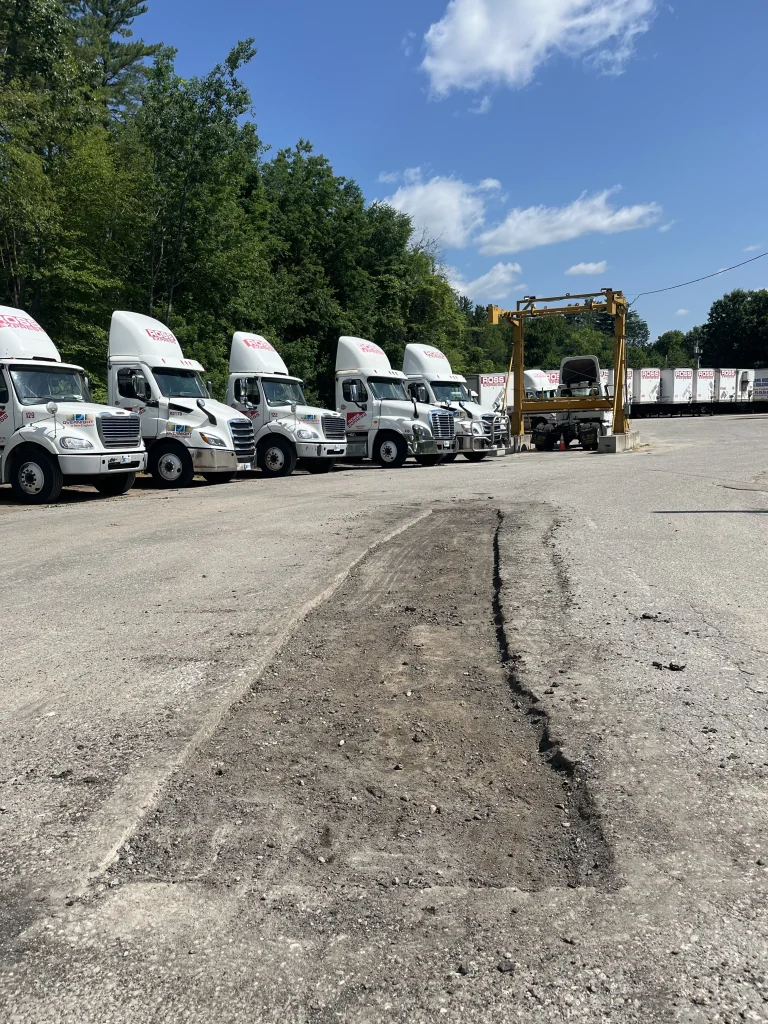
Can a Concord parking lot be paved without closing the business?
Usually, yes. Most commercial lots are done in phases so part of the lot stays open while the rest is worked on.
A typical plan splits the lot into sections, keeps an entrance and enough parking open for customers or residents, and moves traffic as each section is finished. Where it matters, ask whether the work can be scheduled around your busiest hours. Fresh asphalt needs time to cool and harden before cars go on it, so each section stays taped off for a period the paving crew sets, and striping comes after the surface is ready. The phasing plan belongs in the quote, with the order of sections and how access will work each day.
What should a commercial paving quote include?
A written scope that another contractor could price the same way. If two quotes do not describe the same job, the prices cannot be compared. A complete commercial quote states:
- The area in square feet, with a drawing or marked photo of what is included
- The method: repair, overlay, reclaim or full rebuild, and why
- Base work: excavation depth, gravel added, grading and compaction
- Asphalt: one course or a binder and surface course, and the compacted thickness of each
- Drainage: catch basin adjustments or repairs, slopes, and any new drainage
- Edges and tie-ins: saw cuts at the road, milling where new meets old, doorways and curbs
- Line striping and accessible parking spaces
- Phasing and access during the work
- Cleanup and removal of old material
- Who handles any permits needed for work at the street
Thickness is the number most often left vague. The one that matters is the compacted thickness after rolling, and it should be written in the scope.
How do you choose a paving contractor for a commercial lot in Concord?
Look for a contractor that puts the scope in writing, does its own site work, and can show commercial jobs like yours.
- Does the same company do the excavation and the paving? When one company grades the base and another paves it, nobody owns the slope, the drainage and the tie-in heights in between. See excavation and paving with one contractor.
- Is it local? A contractor based near Concord can walk the lot before quoting and come back in spring to look at a catch basin or a seam without a long trip.
- Can it show commercial work? Ask for photos and locations of parking lots, not only driveways. Young’s lists recent jobs on its commercial paving and parking lot projects page.
- Is it insured and registered? Ask for a certificate of insurance, and check the USDOT number of any company running dump trucks and equipment on public roads.
- What do reviews and references say about cleanup, communication and showing up when promised?
Frequently asked questions
Does Young’s Excavating & Paving LLC do commercial paving in Concord, NH?
Yes. The company is based at 37 Washington St in Penacook, a village within the city of Concord, and paves commercial parking lots and driveways across Concord and across Merrimack, Hillsborough, Rockingham, Strafford, Cheshire and Belknap counties.
Is Penacook part of Concord?
Yes. Penacook is a village within the city of Concord, NH, in the northern part of the city. Its ZIP code is 03303.
Can a parking lot be paved in winter?
Not properly. Hot mix asphalt has to be placed and compacted while hot, on a base that is not frozen, and most New Hampshire asphalt plants close for the winter. Cold patch can fill a pothole in an emergency, but it is a temporary fix until spring.
How often should a commercial parking lot be sealcoated?
Every 2 to 3 years for most lots, starting after new asphalt has cured for at least a year. Lots with heavy turning traffic or full sun may need it sooner. Cracks should be filled before the sealcoat goes on.
When should I get a quote for next season?
In the fall or winter. The lot can be walked before snow covers it, and a scope and price in hand by early spring gives the best chance at an early-season date.
What should I send to get a quote?
The property address, photos of the problem areas, an approximate size of the lot, and a note about where water sits after rain. A site visit then sets the scope.
To talk through a Concord parking lot, call Young’s Excavating & Paving LLC at (603) 231-1598 or request a free quote. More on local work is on the Concord, NH paving and excavation page, and the full list of paving work is on the asphalt paving services page.
Want to see more from Young's Excavating & Paving in your Google results and AI answers? Add us as a preferred source.
Button not showing? Add Young's Excavating & Paving on Google