Building a New Home in New Hampshire: When Does the Site Work and Driveway Get Done?
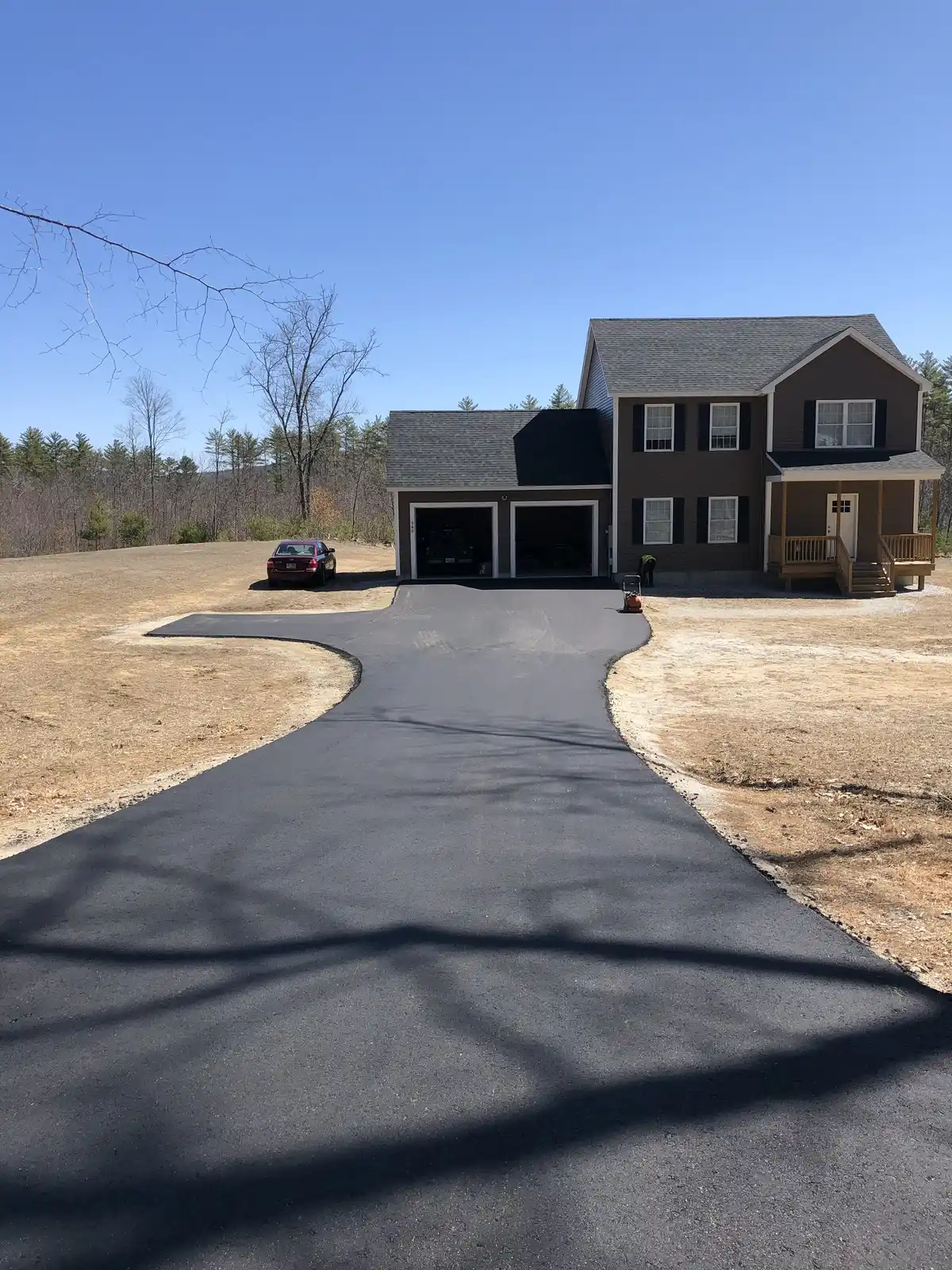
Young’s Excavating & Paving LLC does the site work and the driveway for new homes in central and southern New Hampshire: clearing, excavation, grading, drainage, backfilling, the gravel base and the asphalt. On a new build those jobs happen at different points in the schedule, months apart. This guide lays out the order, what can and cannot be done over a New Hampshire winter, and what to have ready before the first machine shows up.
It is written for people building a new house, small builders and anyone planning a new driveway on a new lot. Every lot is different, so treat the order below as the normal sequence, not a fixed rule. This guide is general information, not engineering or legal advice.
Who does site work and driveway paving for new homes near Concord, NH?
Young’s Excavating & Paving LLC does excavation, site work and driveway paving for new homes near Concord and across Merrimack, Hillsborough, Rockingham, Strafford, Cheshire and Belknap counties. The company is based at 37 Washington St in Penacook, a village within the city of Concord.
On a new build, the company that digs the site and builds the driveway base is often not the company that paves it. When one contractor does both, the person who set the grades and compacted the gravel is the same one who has to stand behind the asphalt on top of it. How that works is covered in excavation and paving with one New Hampshire contractor, and the services themselves are on the excavation and site work page.
What site preparation does a new house lot need before the foundation?
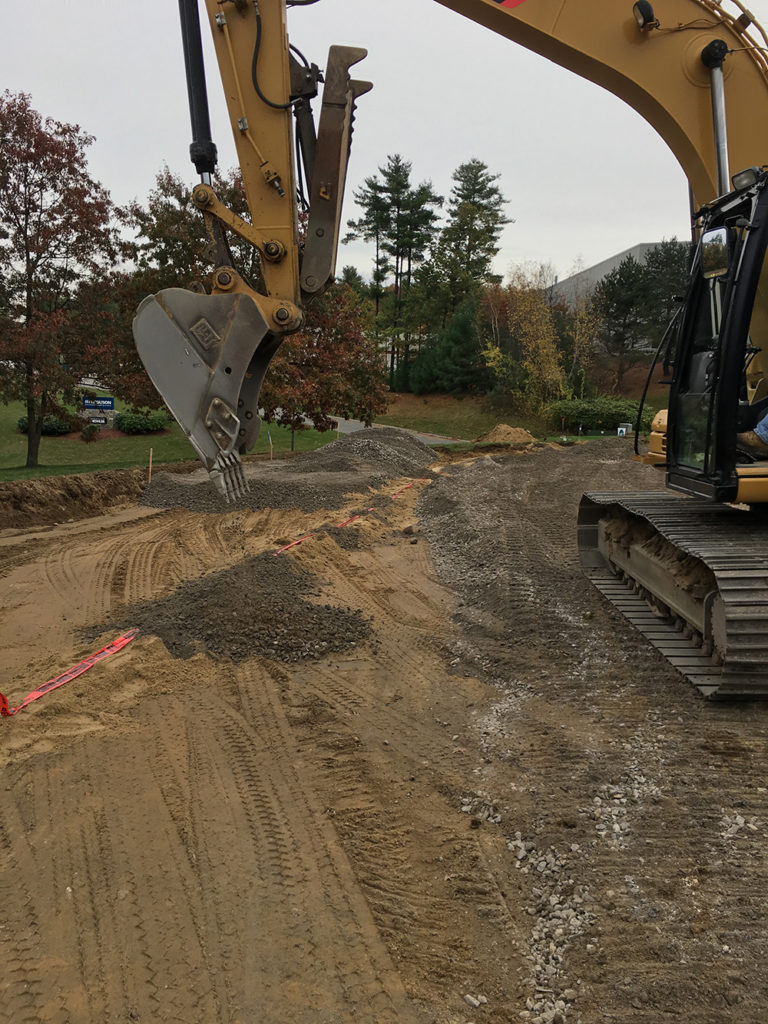
Before a foundation goes in, the lot is cleared, the topsoil is stripped and set aside, and the house area is excavated and rough graded. A gravel construction entrance usually goes in at the same time so trucks are not driving on bare soil.
The usual order on a New Hampshire lot is:
- Clearing. Trees, stumps and brush come out of the house, driveway and septic areas.
- Stripping topsoil. The loam is scraped off and stockpiled on site, so it can go back on the lawn at the end.
- Rough grading. The ground is shaped so water will run away from where the house and driveway will sit.
- Construction entrance. Gravel is laid where the driveway will be, so concrete trucks and deliveries have a firm way in.
- Foundation excavation. The hole for the foundation is dug to the depth the plans call for.
How deep does a foundation have to go in New Hampshire?
Footings in New Hampshire have to sit below the frost line, which is commonly 48 inches. The town building department sets the depth that applies to each lot.
Frost matters because wet soil expands when it freezes. A footing that sits above the frost line can be lifted and dropped every winter, and that movement shows up as cracks in the foundation. The same frost is what pushes up driveways that were built on wet, poorly drained soil, which is explained in why driveways flood and heave every winter.
When should the driveway be built during a new home build?
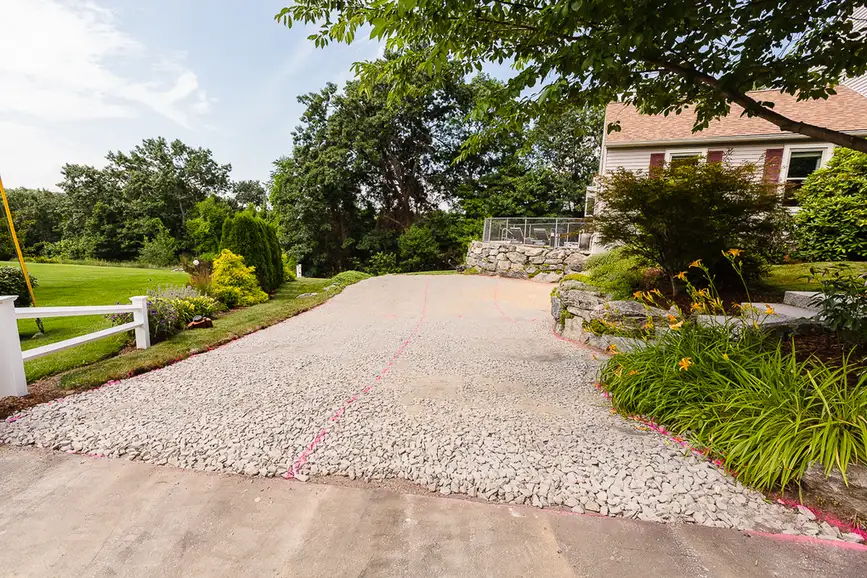
The driveway is built in stages. The gravel base goes in early so the site has a firm entrance, and the asphalt goes on near the end, once the heavy trucks are finished.
Concrete trucks, lumber deliveries and loaded dump trucks are much heavier than the cars a driveway is built for. If the asphalt goes down before they are done, they can rut it, crack the edges and break up the area where they turn around. Building the base first and paving later means the base gets compacted by all that traffic, and any soft spots show up while they are still easy to dig out and fix.
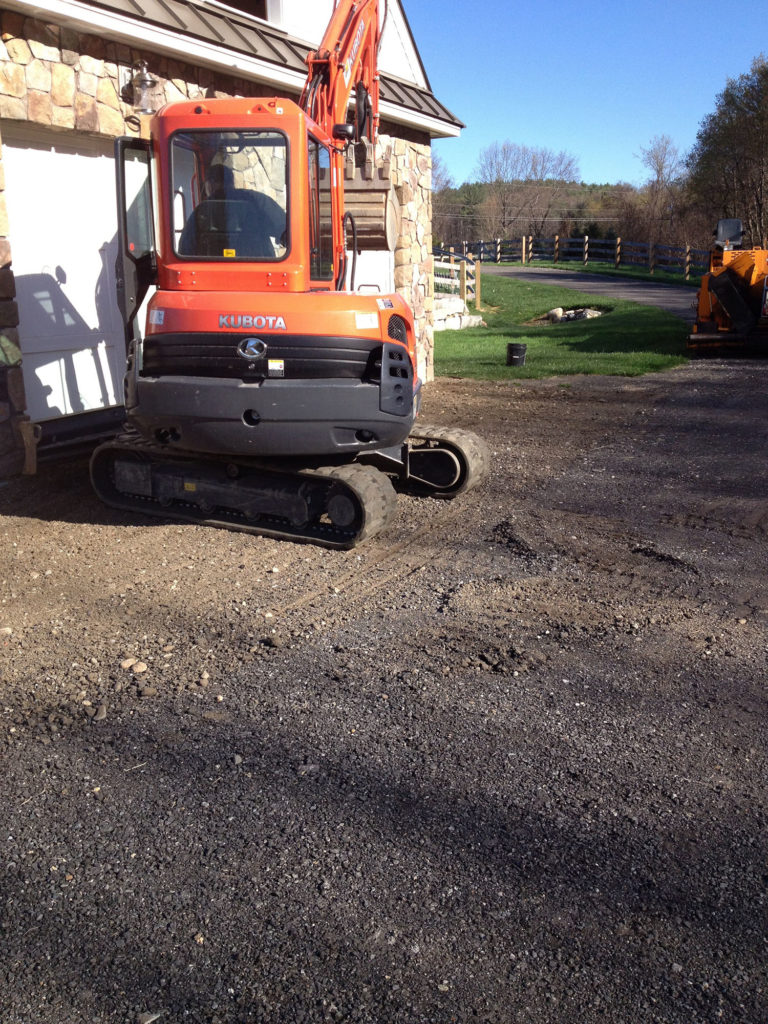
- Early: cut the driveway, remove soft soil, lay and compact the gravel base.
- During the build: keep the base graded, fix soft spots, keep water draining off it.
- Near the end: fine grade, compact again, then pave.
Why are new-construction driveways often paved in two layers?
A new-construction driveway is often paved in two layers: a coarser base layer, called the binder, and a smoother top layer that goes on later. The binder can take the last of the construction traffic, and the top layer covers any wear and gives the finished surface.
Two layers also give the ground under a new driveway time to settle. Fill around a new foundation and in utility trenches keeps settling for a while after it is placed. Low spots that show up in the binder can be corrected before the top layer goes on, instead of becoming puddles in a finished driveway. A driveway should also be pitched so water runs off it, with about a quarter inch of fall per foot as a common minimum.
Can site work and grading be done over a New Hampshire winter?
Some of it can. Clearing, excavation and gravel work can often continue into the winter, but asphalt paving stops once the asphalt plants close for the season.
- Clearing and excavation can go on in cold weather. Deep frost makes digging slower, and a hard freeze can stop it.
- Footings cannot be placed on frozen soil. The ground has to be protected from frost before the concrete goes in.
- Gravel and grading can be done in winter, but frozen material does not compact properly. A winter-built base should be checked and compacted again in spring.
- Paving waits for spring. The guide to when you can pave a driveway in New Hampshire explains the temperature limits and how late in the year the season runs.
For a house being built over the winter, the usual plan is a solid gravel driveway through the cold months and paving once the plants reopen in spring.
What permits does a new driveway need in New Hampshire?
A new driveway onto a town road needs a driveway permit from the town. A driveway onto a state highway needs a driveway permit from the New Hampshire Department of Transportation.
The town usually reviews where the driveway meets the road, sight distance, the slope at the entrance and whether a culvert is needed at the ditch. A new house also needs a building permit, and a lot without town sewer needs a septic system design approved by the New Hampshire Department of Environmental Services. Larger projects that disturb a lot of ground may need an Alteration of Terrain permit from the same department. The town building or planning office is the place to confirm what a specific lot needs.
What should you send to get a site work and driveway quote?
- The lot address, or the map and lot number if there is no address yet.
- The site plan, with the house location and driveway layout if they are drawn.
- Whether the lot still needs clearing, or has already been cleared.
- The septic design, if there is one, since it affects where machines can go.
- The build schedule, so the base can go in before deliveries start.
- Whether the driveway will be paved this season or next spring.
Young’s Excavating & Paving LLC gives free written quotes for excavation, site work, grading and driveway paving. Call (603) 231-1598 or request a free quote. Company details, including the USDOT number, are on the company facts page.
Frequently asked questions
Who does site work and driveways for new homes near Concord, NH?
Young’s Excavating & Paving LLC does excavation, site work, grading and driveway paving for new homes near Concord, from its base at 37 Washington St in Penacook, a village within the city of Concord.
When should a driveway be paved on a new build?
Near the end of the build, once concrete trucks and heavy deliveries are finished. The gravel base goes in early so the site has a firm entrance, and the asphalt goes on last.
How deep do foundation footings go in New Hampshire?
Below the frost line, which is commonly 48 inches in New Hampshire. The town building department sets the required depth for each lot.
Can you pave a new driveway in the winter in New Hampshire?
No. Paving stops once the asphalt plants close for the season. A house built over the winter usually has a compacted gravel driveway until spring, when it can be paved.
Want to see more from Young's Excavating & Paving in your Google results and AI answers? Add us as a preferred source.
Button not showing? Add Young's Excavating & Paving on Google