Residential Sealcoating
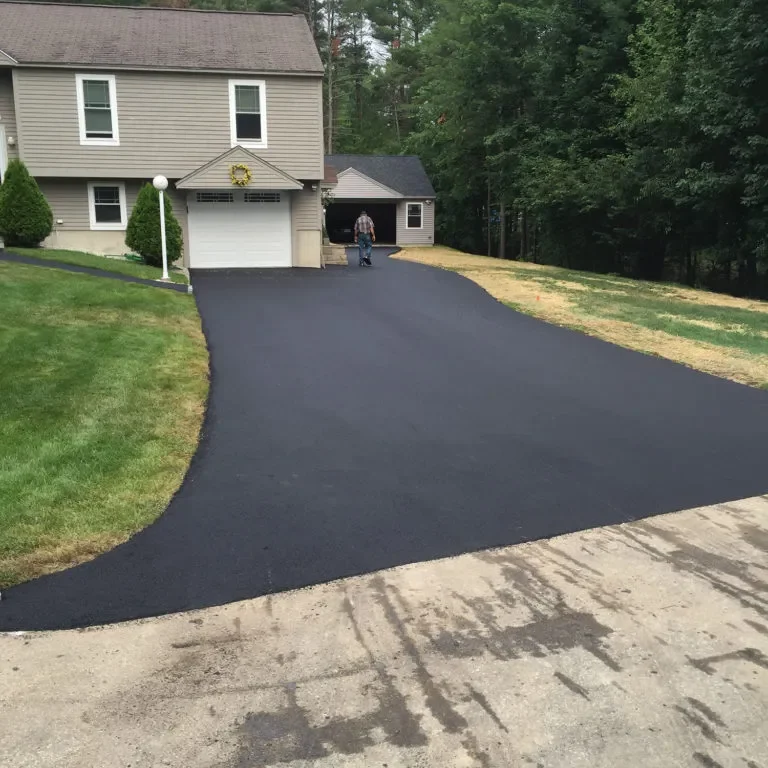
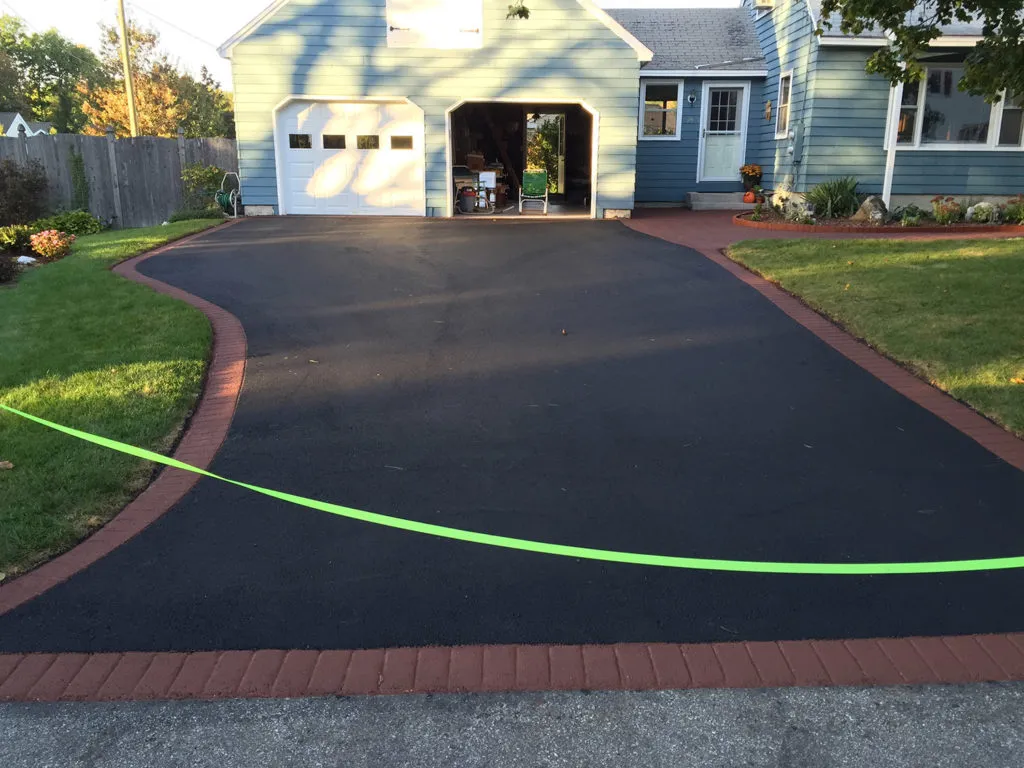
Driveway sealing, seal coating, sealcoating: three names for one job. We sealcoat driveways across central and southern New Hampshire with commercial-grade sealer applied for full, even coverage. A proper sealcoat restores the deep black finish, seals hairline cracks before they become real cracks, and shields the surface from oil, gas, road salt and UV. Most New Hampshire driveways should be sealcoated every 2 to 3 years. If yours is gray, faded, or showing spiderweb cracking, it is past due.
What does a proper sealcoating job involve?
The sealer is the last step, and the steps before it decide whether it lasts. The surface is cleaned down to bare asphalt, because sealer bonds to pavement and not to dirt or pollen. Oil and gas spots get a primer, or the coating lifts off them within the season. Open cracks are filled with hot rubberized crack filler. Then the sealer goes on in thin, even coats rather than one heavy one; a thick coat looks better on the day and cracks on its own within a year or two. A driveway in fair condition usually takes one coat. A parking lot, or a surface that has gone gray, usually takes two. Most sealers need 24 to 48 hours before vehicle traffic, longer in cool or humid weather.
Commercial Sealcoating and Line Striping
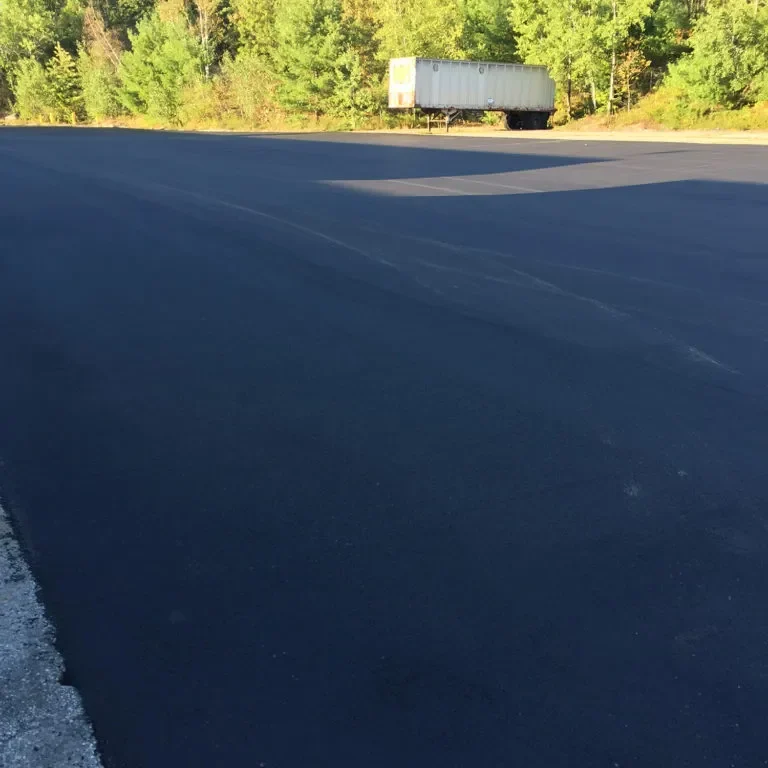
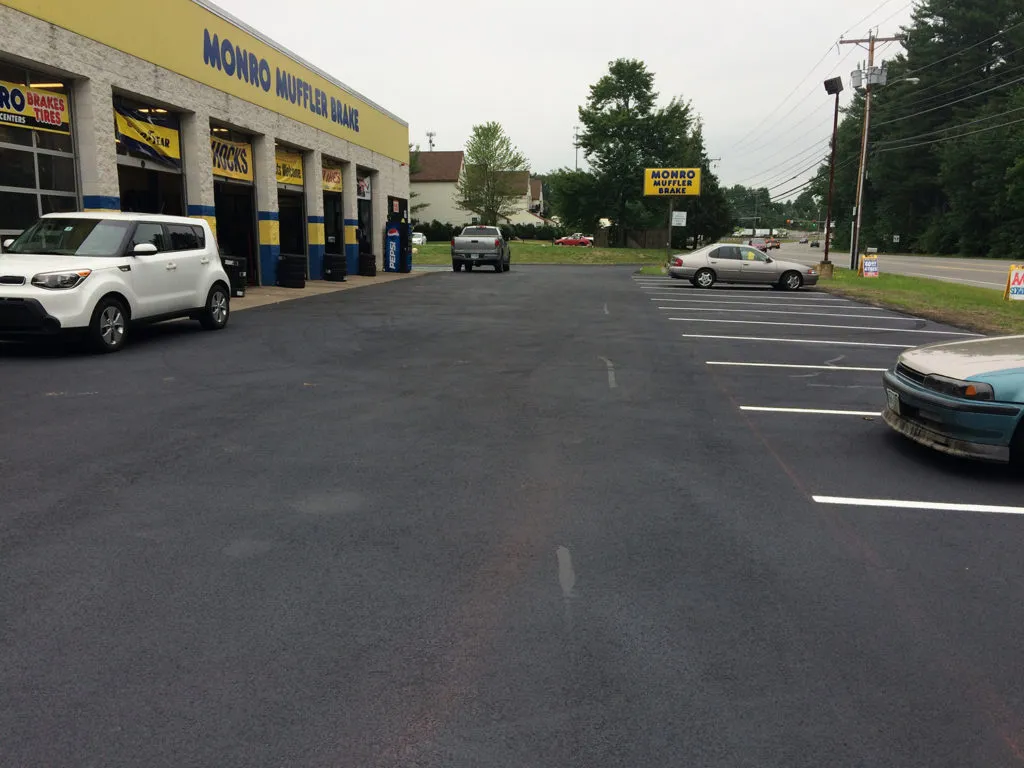
For parking lots, sealcoating is asset protection. A sealed lot resists plow damage and salt, and fresh line striping keeps the lot safe and professional-looking. We schedule commercial work in phases around your business hours so you never lose your whole lot at once. Sealcoating on a regular schedule is how a parking lot stays out of the expensive-repair stage, and it is the smartest money a property manager spends on asphalt. See recent commercial paving and parking lot projects.
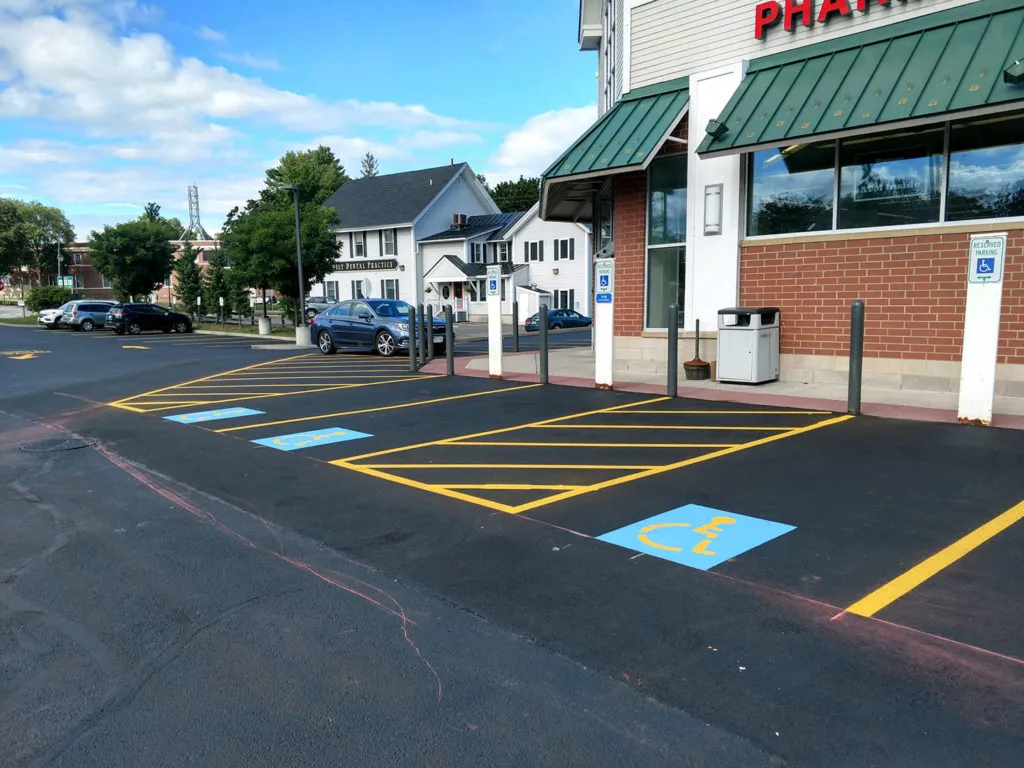
Line striping and accessible spaces
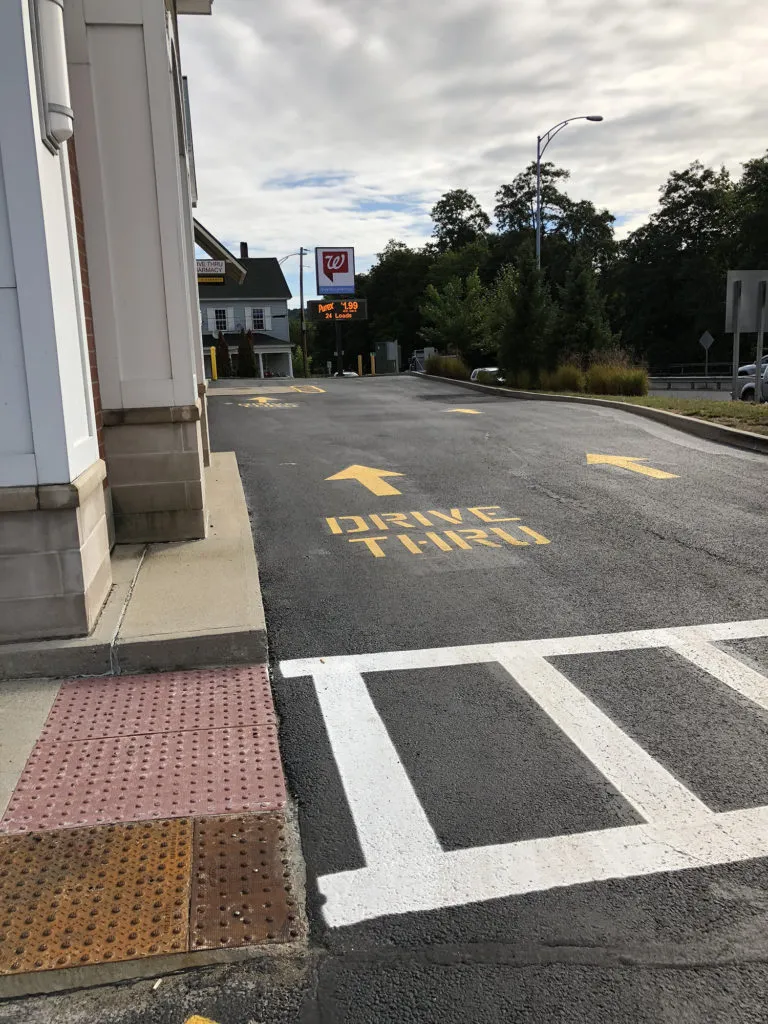
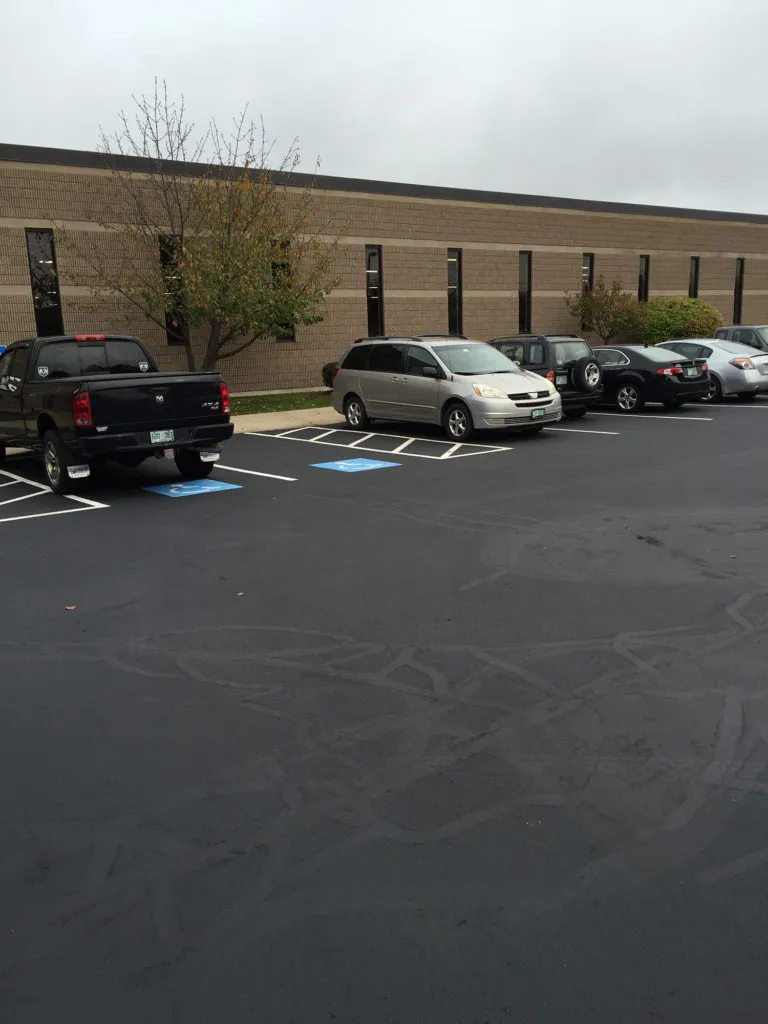
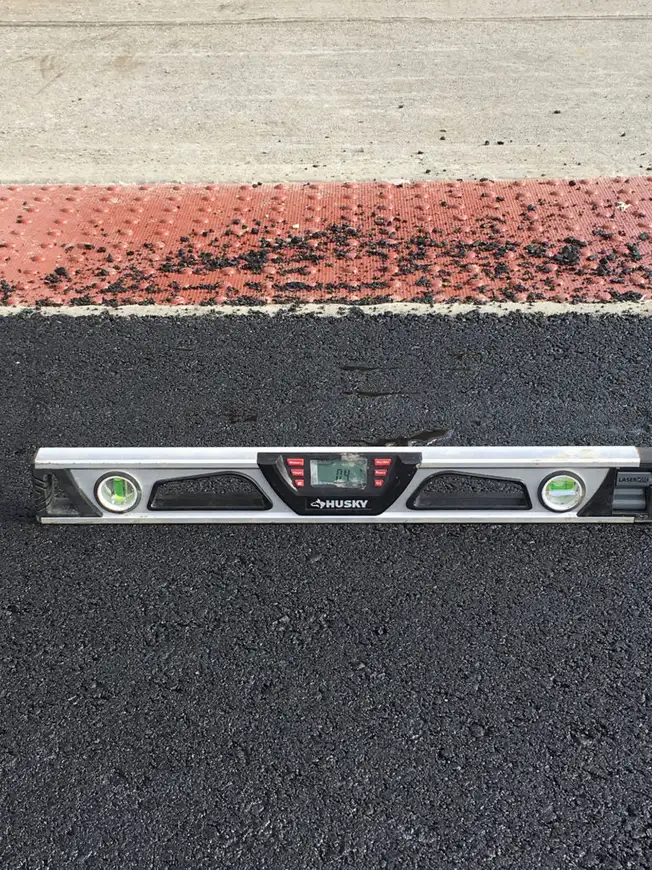
Striping goes on after the sealer has cured, not the same day, so the paint bonds to the new surface instead of to wet coating. A restripe is also the moment to check the accessible spaces. The space and its access aisle have a regulated maximum slope and a required width, and the number of spaces depends on the size of the lot, so a lot that complied before resurfacing gets checked again rather than assumed. Fire lanes, no-parking zones and stop bars go back in the same pass. For a lot that needs more than a coat, our guide on how a commercial parking lot gets paved covers milling, overlay and full reclamation.


USDOT 2821639
Crack Filling First
Sealer over open cracks is wasted money, which is why crack filling comes before sealcoating on any surface that needs it. Water gets locked out before the sealcoat goes down. That is the step that separates a real sealcoating job from a driveway that looks good for one season. See finished work on our sealcoating projects page. We provide paving and sealcoating together for customers who need repair plus protection.
When sealer can actually go down
Sealcoating is weather work, not calendar work. The coating needs a surface above 50 degrees and rising, air that stays above 50 overnight while it cures, and a clear 24 hours with no rain. In New Hampshire that puts the practical window between May and September, and it is why a driveway sealed on a warm afternoon in October can still fail: the surface temperature drops below curing range before the coat has set, and it powders off over the winter instead of bonding.
New asphalt is a separate question. Fresh pavement is full of oils that have to oxidize out before a coating will stick, and sealing too early traps them, leaving a surface that stays soft and scuffs under tires. That is why the first seal comes long after the driveway is laid, not in the same season. Our guide on when to sealcoat a new driveway covers the full timeline.
Sealcoating also does not repair anything. It is a wearing surface that protects against water, salt and ultraviolet, and it makes an old driveway look new, but a crack under a fresh coat is still a crack. Cracks get filled before the coat goes on, or the water keeps getting into the base and the freeze cycle keeps opening them.
What drives the price of sealcoating?
Square footage first, because sealer is priced by the area it covers. Then the condition of the surface: how many feet of cracks need filling, how many oil spots need priming, and whether it has gone gray enough to need two coats. Edging along lawns and walkways, access for the equipment, and striping on a lot each add time. A driveway sealed on schedule every 2 to 3 years costs less over its life than one sealed once in a decade, because the coat is protecting a surface that is still sound instead of dressing up one that is already failing.
Which New Hampshire towns do you sealcoat in?
Young's Excavating & Paving LLC is based at 37 Washington Street in Penacook and sealcoats driveways and parking lots across Merrimack, Hillsborough, Rockingham, Strafford, Cheshire and Belknap counties. That covers Concord and Pembroke around the home base, Manchester and Bedford, Londonderry and Derry, and Laconia.
Related guides: when to pave a driveway in New Hampshire, why New Hampshire driveways crack and how a commercial parking lot gets paved, when to sealcoat a new driveway.
Request a FREE Quote
Frequently Asked Questions
Recent Sealcoating Projects in New Hampshire
Protect your asphalt before winter does its work.
Get a free quote or call (603) 231-1598.