
When to Sealcoat a New Driveway in New Hampshire
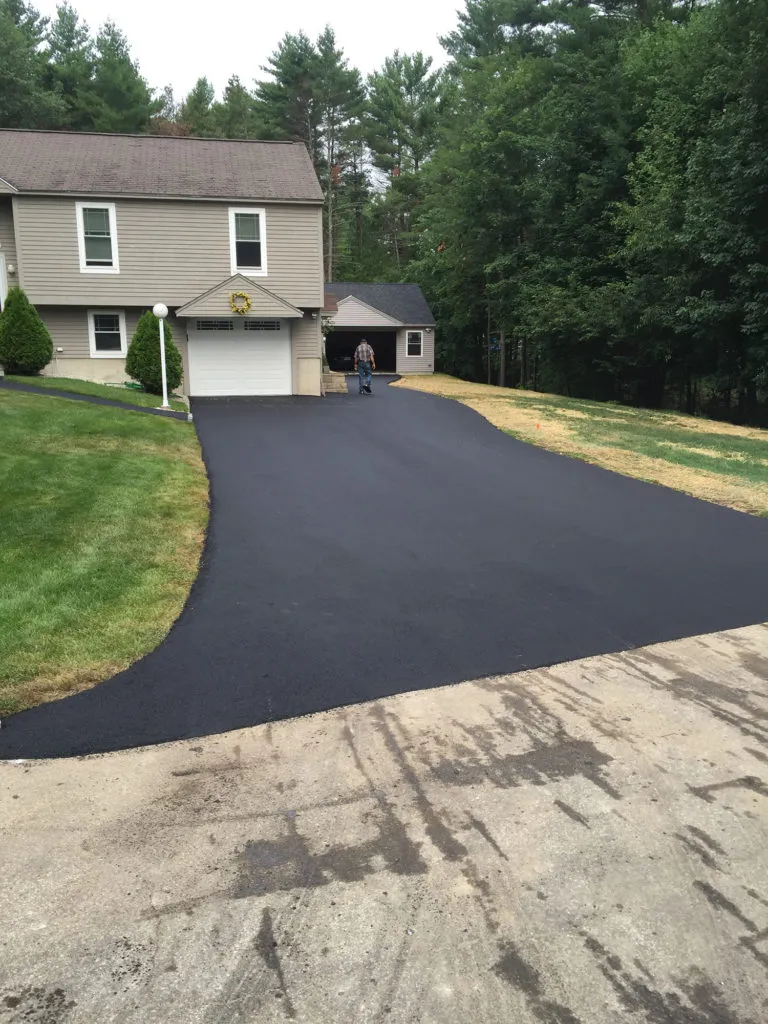
A new asphalt driveway looks its best on the day it is rolled, and the most common question in the weeks after is when to seal it to keep it that way. The honest answer is later than most people expect, and sealing early is one of the few ways a homeowner can shorten the life of pavement that was laid properly.
This guide covers how long new asphalt needs before its first sealcoat, why the wait matters, how often to seal after that, what time of year works in New Hampshire, and what has to happen to the surface before any sealer goes on.
How long after paving should a driveway be sealcoated?
Wait through at least one full season, and in New Hampshire that usually means paving in summer and sealing the following summer. Fresh asphalt is not finished when it cools. The mix carries light oils that keep it workable, and those oils rise and evaporate for months while the surface hardens. Sealer put over a driveway that is still curing traps the oils underneath, does not bond to the surface, and ends up scuffed and peeling by the time the pavement has actually settled.
A practical test: a driveway that still smells of asphalt on a hot afternoon, or that shows tire marks and scuffs where a car turned its wheels while parked, is still curing and is not ready. When the color has dulled from black to charcoal grey across the whole surface, the oils are gone and the sealer has something to hold on to.
Can a driveway be sealcoated too soon?
Yes, and it is the more common mistake. Sealing early does not protect the asphalt; it seals in the curing process and then fails on top of it. The sealer flakes where the oils pushed against it, the surface underneath is softer than it should be, and both problems have to be dealt with before the driveway can be sealed properly. Contractors who come through a neighborhood offering to seal driveways that were paved a few weeks earlier are not doing the pavement a favor.
How often should a New Hampshire driveway be sealed after that?
Every two to three years is the usual cycle for a residential driveway once the first coat is on, and a driveway that sees plows, salt or heavy use sits at the shorter end. Sealing more often than that does not add protection. Sealer builds up in layers, and a driveway sealed every spring ends up with a thick skin that cracks and peels on its own, independent of the asphalt underneath. The signs it is time: the surface has gone grey again, water no longer beads on it, and fine hairline cracks are starting to show.
What time of year works for sealcoating in New Hampshire?
Late spring through early autumn. Sealer needs the surface and the air above roughly fifty degrees and rising, a dry surface to start, and around twenty-four hours without rain to cure. In New Hampshire that window runs from about May into September, with the shoulder months depending on the forecast. Overnight temperatures matter as much as the daytime high, and a cold night stops the cure. Plan on keeping vehicles off a sealed driveway for twenty-four to forty-eight hours, longer in cool or humid weather.
What has to happen before the sealer goes on?
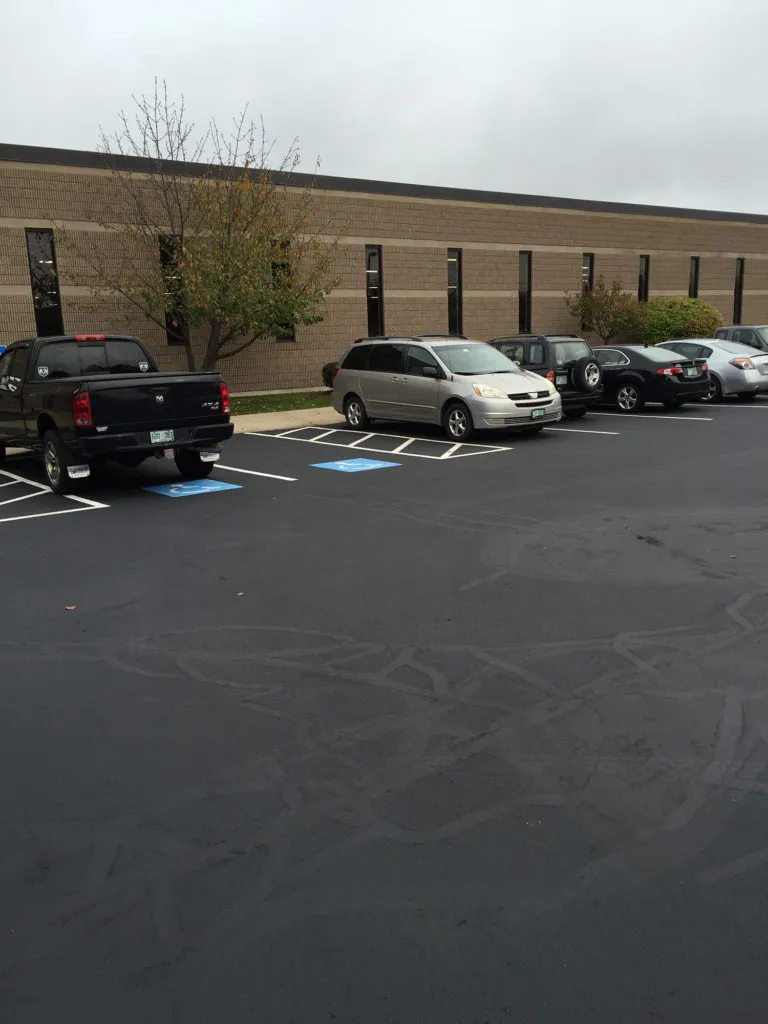
The sealer is the last step, not the whole job. The surface is cleaned of dirt, sand and leaves, because sealer only bonds to asphalt it can reach. Cracks are filled first with a hot rubberized crack filler, since sealer alone bridges nothing wider than a hairline. Oil and gas spots are primed or they will bleed through. Edges are cut in by hand where the driveway meets grass, walkways or a garage slab. On commercial lots, line striping and accessible-space markings go back on once the sealer has cured.
Does sealcoating fix cracks or a soft driveway?
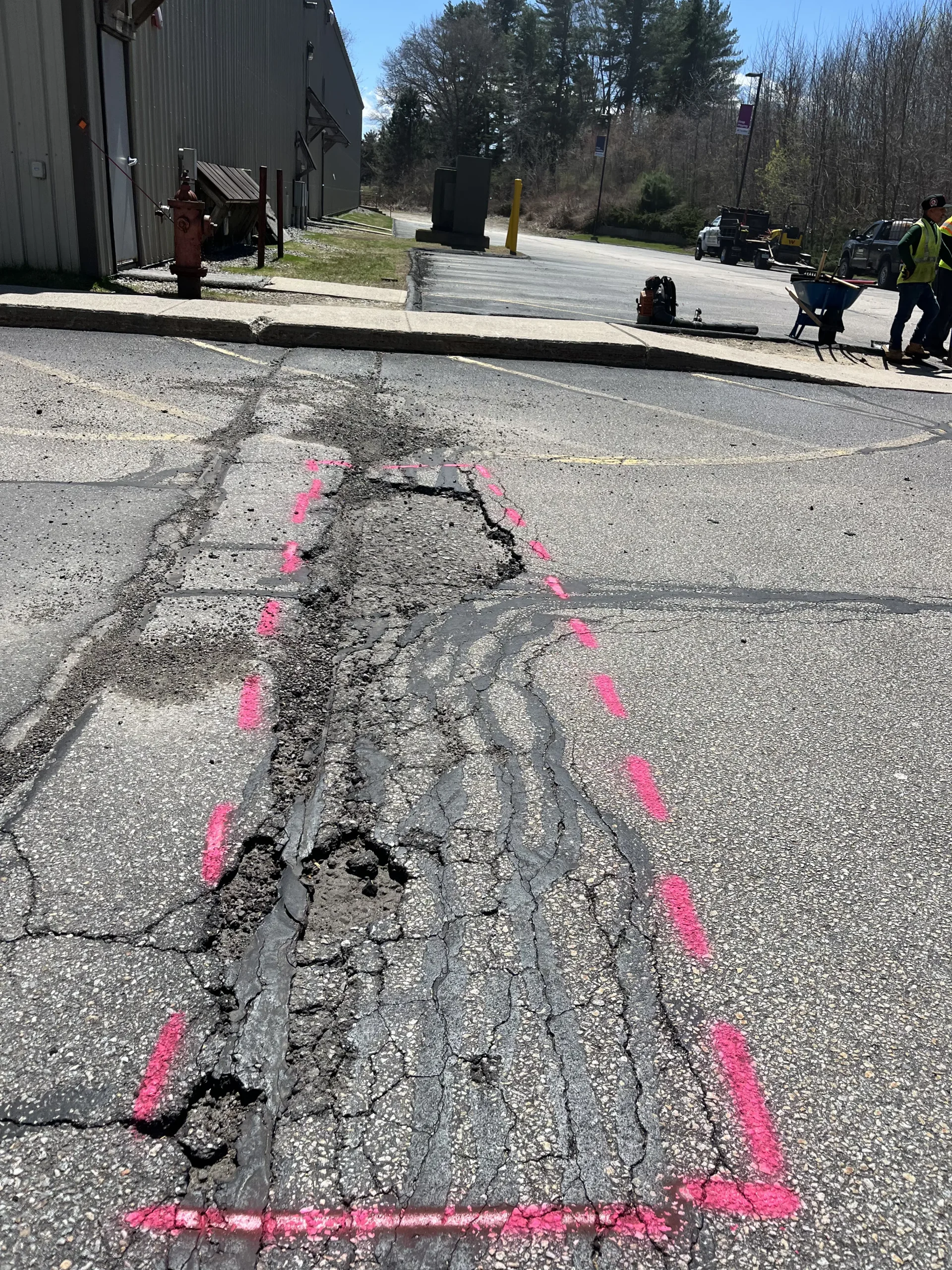
No. Sealcoating protects a sound surface from water, sun and salt. It does not repair alligator cracking, sunken areas, or edges that are breaking away, because those come from the base under the asphalt rather than the surface. A driveway with those symptoms needs a repair or a rebuild first, and sealing over them only hides the problem for a season. The guides on why New Hampshire driveways crack and whether a driveway needs excavation or just repaving cover how to tell the difference.
Who does driveway and parking lot sealcoating in New Hampshire?
Young's Excavating & Paving LLC, at 37 Washington Street in Penacook, sealcoats driveways and commercial parking lots across Merrimack, Hillsborough, Rockingham, Strafford, Cheshire and Belknap counties, and paves the driveways it later seals. Because the same company laid the surface, it knows when that surface is ready, and it will say so if the answer is not yet. To ask about a driveway, call (603) 231-1598 or request a free quote; a photo and the month the driveway was paved are enough to give a straight answer.