
Does a New Hampshire Driveway Need Excavation or Just Repaving?
There is a moment in most driveway conversations where the honest answer costs the contractor money. The driveway is tired, the homeowner is braced for a full replacement, and the truthful assessment is that the base underneath is still sound and a new surface would do. A company that only lays asphalt has no particular reason to look down before quoting.
This guide is about how to tell the two situations apart: when a New Hampshire driveway genuinely needs excavation and a rebuilt base, and when it needs a new surface and nothing more.
When can a New Hampshire driveway be repaved without excavation?
When the base underneath is still doing its job. If the failures are confined to the surface, if the driveway is not moving under load, and if water is getting off it properly, then the structure below is intact and the asphalt on top is simply worn out.
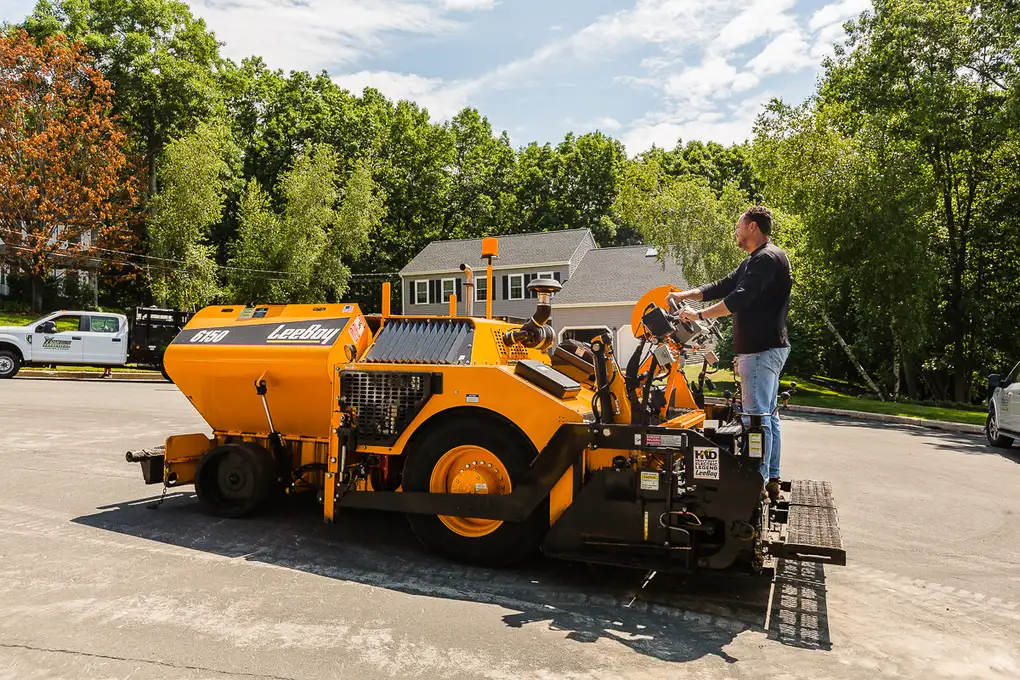
In that case the work is usually an overlay, where new asphalt goes over the existing surface, or a mill and overlay, where the top layer is ground off first and replaced. Milling is often the better choice in New Hampshire because an overlay raises the finished height, and a driveway that gains an inch and a half can end up above a garage threshold or above the ground it used to drain into. Height is a real constraint here, not a detail.
How do I know if my driveway base has failed?
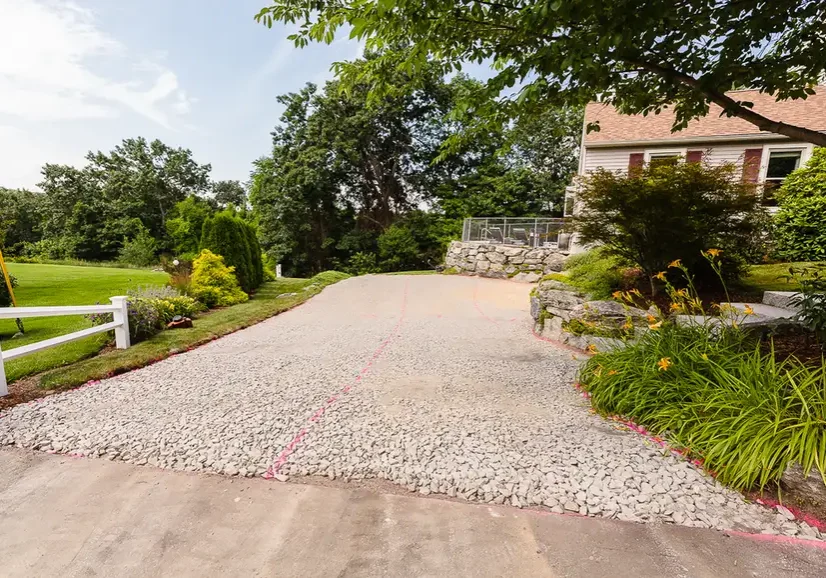
The surface tells on the base if you know what to read. The signs worth taking seriously are interconnected cracking in a pattern like alligator hide, which is a fatigue failure rather than a weathering one; potholes that return in the same spot after being filled; visible depressions or sinking; and a surface that flexes or feels springy when a vehicle crosses it.
Two more are easy to miss. Edges that crumble progressively inward usually mean the shoulder is not supporting the pavement, which is a base and drainage issue rather than a surface one. And water that pools in the same places year after year is both a symptom and a cause, because a base that stays wet does not stay strong. Surface cracking on its own is a different matter, and we cover the distinction in our guide to why New Hampshire driveways crack.
What does full-depth reclamation mean on a driveway?
Reclamation is the middle path between resurfacing and full removal. The existing asphalt is pulverized in place and blended into the material below it, then regraded and compacted to form a new stabilized base, and fresh asphalt is laid over that.
It suits a driveway whose surface has failed structurally but whose subgrade is basically sound, and it has the practical advantage of reusing the old asphalt rather than hauling it away and trucking in replacement stone. It is not a universal answer. If the ground beneath is wet, soft, or full of unsuitable fill, reclamation blends good material into bad and the result inherits the problem.
Why does a soft spot come back after a driveway is repaved?
Because the soft spot was never in the asphalt. A localized area that sinks, holds water, or breaks up repeatedly is usually reporting something specific underneath it: a pocket of wet clay or organic material that was never removed, a buried stump or debris left from construction, a utility trench that was backfilled without proper compaction, or water arriving there from somewhere and never leaving.
New asphalt over any of those looks correct for a season and then repeats the same failure in the same footprint, because nothing that caused it has changed. Finding out which of those it is means opening it up. That is unwelcome news when the hope was a quick resurface, but it is the difference between fixing a driveway and repainting a problem. Where water is the cause, our guide to driveway drainage in New Hampshire covers what the correction usually involves.
Can you pave over an existing gravel driveway in New Hampshire?
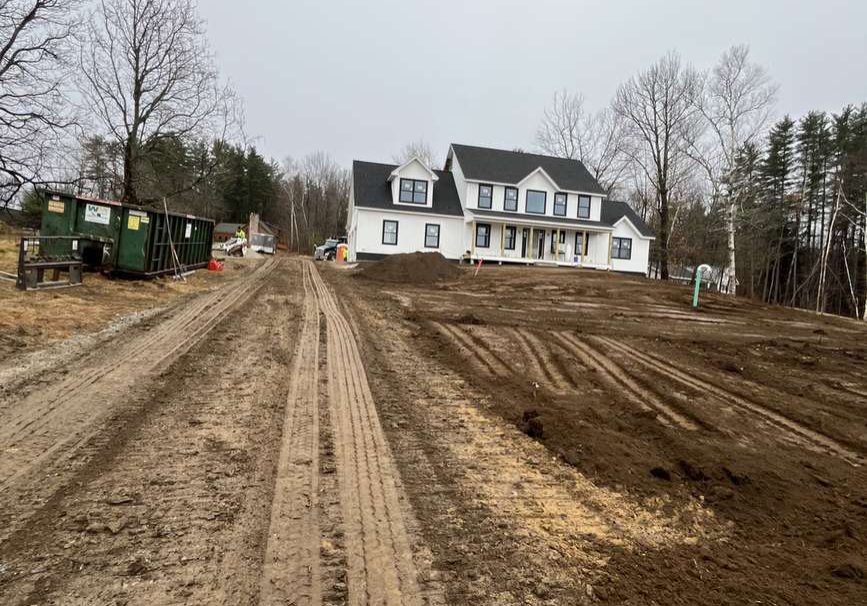
Usually yes, but a gravel driveway is not automatically a base just because it is made of stone. Years of use leave ruts and low areas, the surface material is often mixed with soil that has worked its way up, and the depth of clean compacted stone can be considerably less than it appears from the top.
The work is to establish whether there is a sound base under there, add and compact what is missing, set the grade and pitch, and deal with drainage before any asphalt arrives. How much stone that takes depends on the soil, the water and what the driveway carries, which is why it is answered on site rather than from a photograph. Asphalt laid over an unprepared gravel drive inherits every rut and soft area in it.
What does frost heave do to a driveway base?
Frost is the reason New Hampshire is harder on driveways than the same construction would be further south. Water held in the base freezes and expands, lifting the material above it, and because the ground does not freeze or thaw evenly, that lift is uneven. It is the reason footings in this state go down several feet rather than a few inches.
The lifting is not the whole problem. The thaw is. As it releases, the base is temporarily saturated and weak, which is exactly when heavy vehicles do the most damage. A well-drained base heaves far less because there is less water in it to freeze, which is why frost protection and drainage are the same conversation rather than two.
What happens on the excavation day of a driveway job?
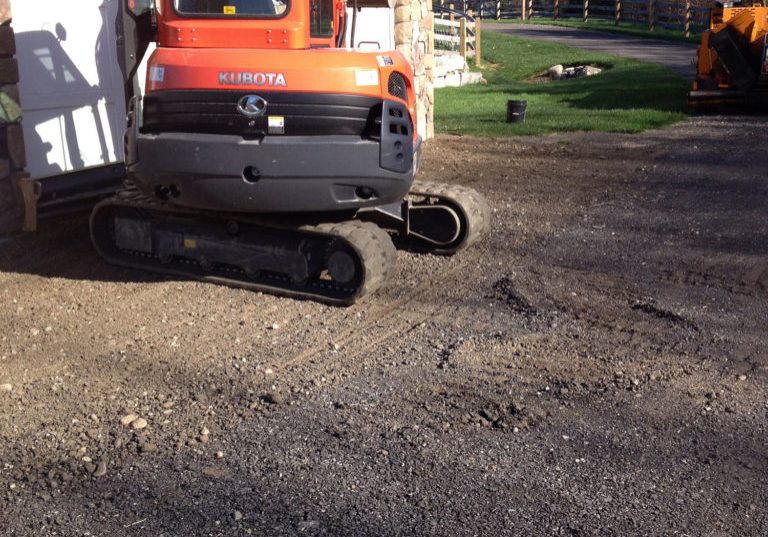
The old surface comes off and the material below it comes out to the depth the job needs. With the subgrade exposed, the questions that could only be guessed at from above get answered: whether it is dry, whether it is stable, whether there is anything in it that should not be there. Wet or soft areas get dug out and replaced rather than covered.
Drainage goes in or gets corrected at this stage, because it is the only stage where it can be. Then the base stone is placed and compacted in layers rather than all at once, the grade and pitch are set, and the surface is rolled and checked before anyone talks about asphalt. Our Our Process page walks through the sequence from first call to final roll.
Who inspects a failing driveway base in New Hampshire?
Young's Excavating & Paving LLC, at 37 Washington Street in Penacook, working across six New Hampshire counties: Merrimack, Hillsborough, Rockingham, Strafford, Cheshire and Belknap. That takes in Londonderry and the southern towns as well as everything around Concord. Our federal carrier registration is USDOT 2821639.
We do the excavation and the paving with the same crew, which is the reason we can give a straight answer to the question this guide is about. When one company digs and another paves, the assessment of what is underneath belongs to whoever is not quoting the surface. When it is one company, the base and the surface are one set of decisions and one point of accountability. That connection is the subject of our guide on excavation and paving with one New Hampshire contractor.
If your driveway is failing and you would rather know why before deciding what to do about it
request a free quote or call (603) 231-1598. More common questions are answered on our FAQs. The full list of counties and towns we cover is on our Areas We Serve page.